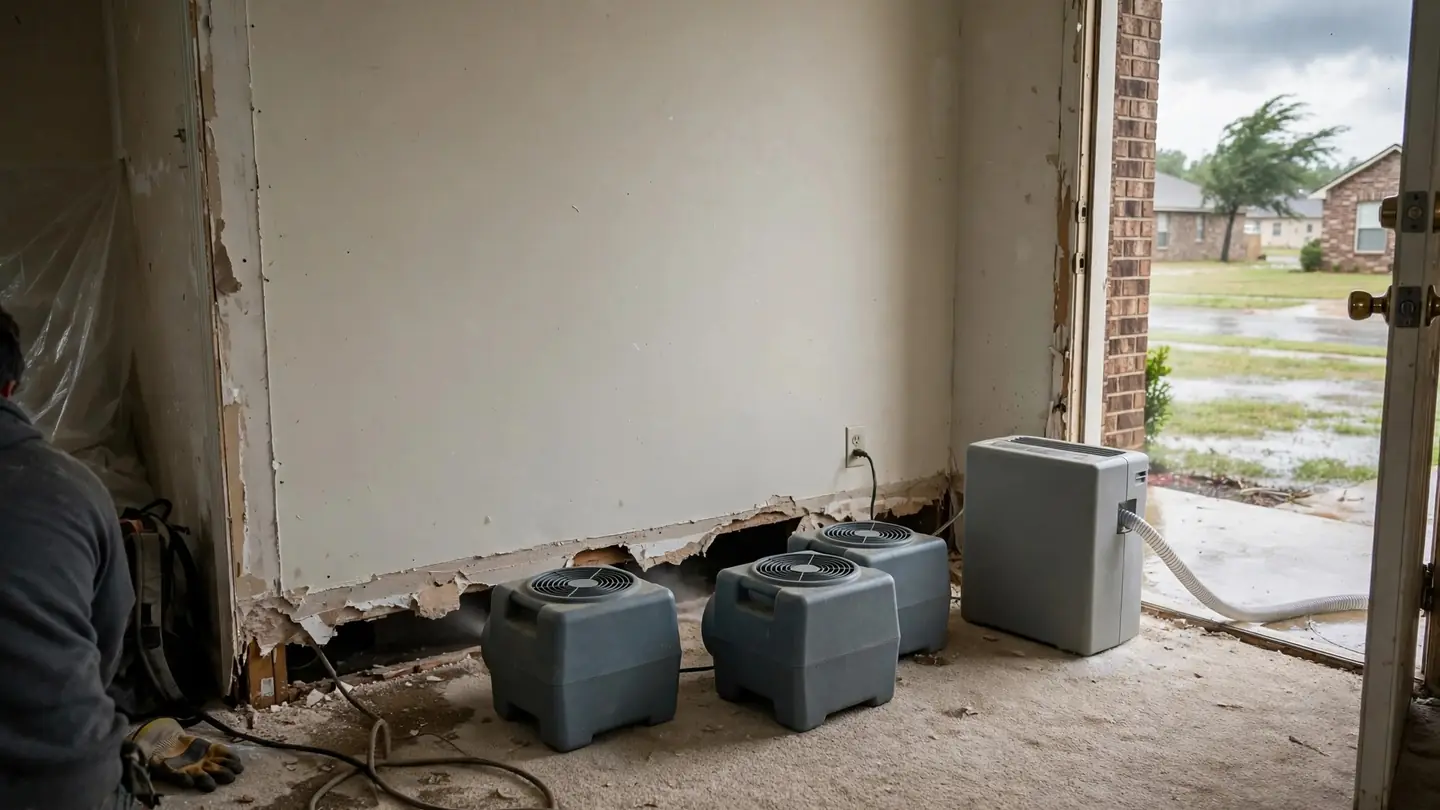
Key facts: Mitigation and Drying
- Mitigation means limiting further damage; restoration means putting the building back, and the IICRC S500 treats drying as a measured process [1].
- Drying is complete when affected materials read close to unaffected materials of the same type in the same building [1].
- Mold can begin on damp materials within 24 to 48 hours, which is why drying starts as early as possible [2].
- North Texas summers are humid, so moisture removed from walls has to be pulled out of the air too, not just blown around.
Definitions
Mitigation versus restoration
People use the two words loosely, but they describe different parts of the job. Mitigation is the emergency and stabilizing work: extraction, removal of ruined materials, protection of contents and drying. Restoration is the rebuild that follows: new drywall, texture, paint, trim and flooring. Insurers often treat them as separate phases with separate paperwork, so it helps to know which one you are talking about.
Drying sits at the center of mitigation. It is the slowest part, often three to five days for an ordinary clean-water loss, and the part most likely to be cut short. A wall that is closed up while it still holds moisture can grow mold inside the cavity, smell musty for months and stain fresh paint. Patience at this stage is what makes the rebuild last.
The science
How structural drying works
Drying is controlled evaporation. Air movers push a fast, low stream of air across wet surfaces, which lifts moisture off them into the room. That moisture then has to go somewhere. If it stays in the air, it settles back into drywall, wood and fabric that were dry. A dehumidifier is what takes it out for good.
The restorer balances the two. Too many air movers and too little dehumidification raises the humidity in the room and slows things down. The right mix is worked out from the size of the room, how much material is wet and what class of water loss it is under the S500 approach [1].
Temperature matters too. Warm air holds more moisture and speeds up evaporation, so drying equipment often runs with the thermostat set a little warmer than usual. The contractor will tell you what setting they want and why.
Equipment
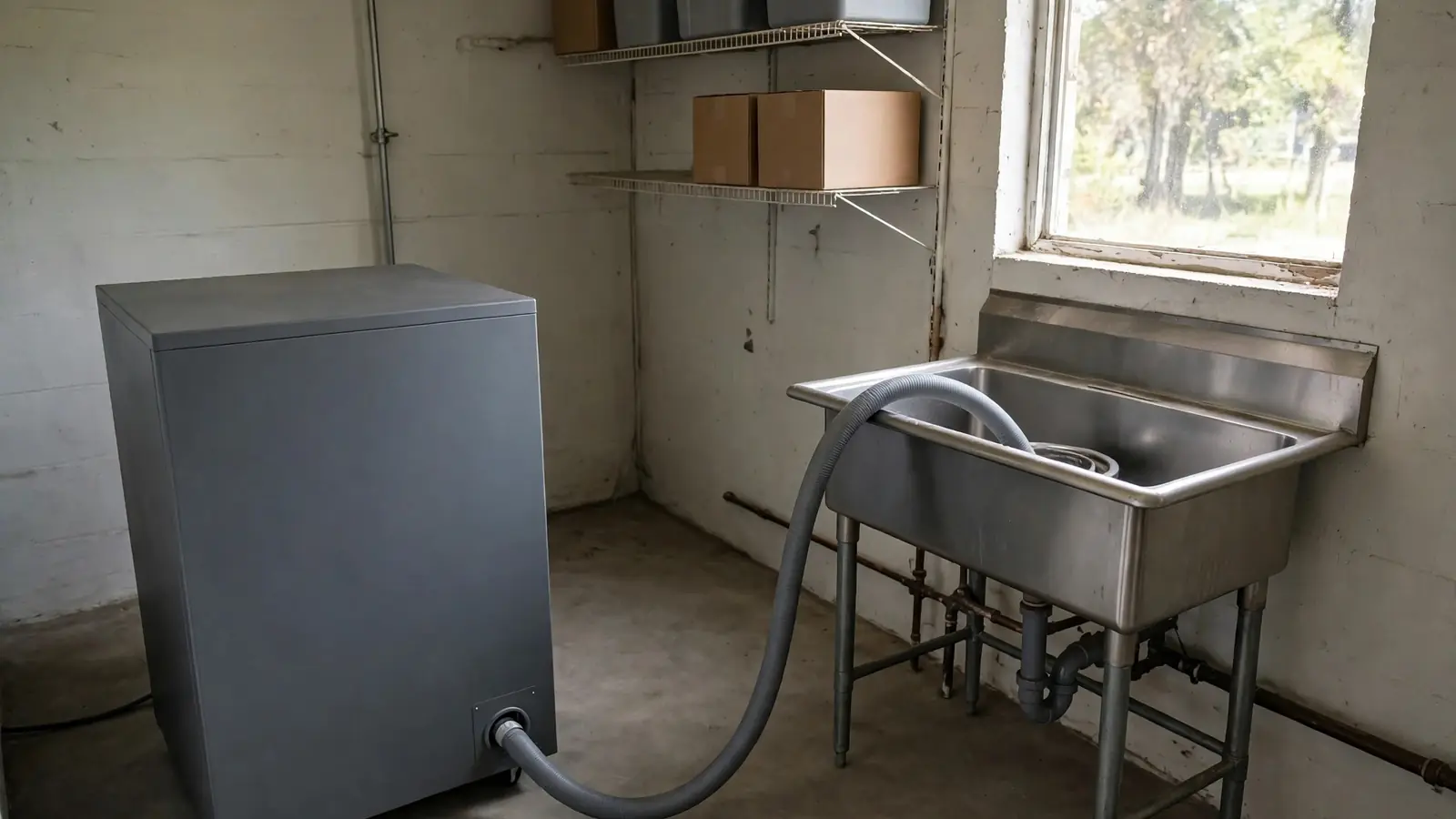
Drying equipment and what it is for
Not every job needs every tool. The mix depends on the materials and the water category.
| Equipment | What it does | Where it is used |
|---|---|---|
| Low-grain refrigerant dehumidifier | Pulls water vapor out of the air and drains it away | Most residential losses |
| Desiccant dehumidifier | Dries air using a moisture-absorbing wheel; works well in cooler air | Large or cold spaces, hardwood, commercial sites |
| Axial and centrifugal air movers | Push air across wet floors and walls | Every room with wet surfaces |
| Wall cavity injection system | Forces dry air into wall cavities through small holes | Walls with tile, cabinets or finishes worth keeping |
| Hardwood floor drying mats | Pull moisture up through wood floors under suction | Cupped or wet hardwood |
| Air scrubber with HEPA filter | Filters dust and spores from the air | Gray or black water, or visible mold |
Warning signs
Signs drying is not finished yet
Readings above the dry standard
If wall or floor readings are still higher than an unaffected area of the same material, drying is not done, no matter how the surface feels.
Humidity creeping up overnight
A room that feels clammy each morning may need more dehumidification, or there may still be a hidden water source.
Paint bubbling
Blistered paint on a wall that was wet can mean moisture is moving out through the surface slowly.
Musty odor near cabinets
Base cabinets and the wall behind them dry slowest. A smell there suggests pockets of moisture remain.
Warped trim returning
Baseboards and door casing that keep moving as days pass are still giving up water.
Testing
How drying progress is measured
Measured drying is the part of the S500 approach most worth asking about [1].
- 1
Set the dry goal
The restorer reads unaffected drywall, wood and flooring elsewhere in the house. Those numbers become the target.
- 2
Log starting readings
Each wet area gets marked readings on a moisture map, with the date and time.
- 3
Record the air
Temperature and relative humidity are noted inside the drying zone, outside the house and at the dehumidifier exhaust.
- 4
Read daily
Every visit repeats the readings. Falling numbers show the plan is working; flat numbers mean something needs to change.
- 5
Adjust equipment
Air movers are repositioned, dehumidifiers added or removed, and cavities opened if a wall is not responding.
- 6
Sign off
When all readings meet the goal, equipment is removed and the job moves to rebuild.
Drying classes
Typical drying classes
These classes come from the S500 framework and describe how much moisture has to be evaporated, not how dirty the water is [1].
| Class | What is wet | What it usually means on site |
|---|---|---|
| Class 1 | Part of one room, little absorbent material | Short job, light equipment |
| Class 2 | A whole room, carpet and walls wet up to about two feet | Standard set-up with air movers and dehumidifiers |
| Class 3 | Walls and ceilings wet, often from above | Heavy dehumidification, ceilings may be opened |
| Class 4 | Dense materials such as hardwood, plaster or concrete | Specialty methods and longer drying times |
The job
How a drying job runs day by day
On the first day the focus is control. Water is removed, wet pad and badly swollen materials come out, contents are moved and equipment goes in. Containment with plastic sheeting may be put up to keep the dry part of the house dry and to make the dehumidifiers more efficient in a smaller space.
Days two and three are about adjustments. Readings show which walls are drying and which are stubborn. Baseboards that were left on may now come off, small holes may be drilled behind them so air can reach inside the wall, and the toe kick under kitchen cabinets may be removed if the base is holding water.
By the end of the week most clean-water jobs are close to dry. Slab floors under tile or vinyl can take longer, and losses involving hardwood or several rooms of a two-story house can run past a week. Once every reading meets the target, the contractor removes the equipment and the house is ready for repairs.
DIY vs pro
What homeowners can and cannot speed up
You can help by keeping doors and windows closed while the dehumidifiers run, especially during humid Mansfield summers when outdoor air carries a lot of moisture. Leave equipment running and plugged in even when the noise is tiresome, and try not to move air movers yourself, because each one is aimed for a reason.
You cannot safely speed it up by switching to box fans, opening every window or cranking the heat with no dehumidifier running. Those shortcuts can push moisture into dry parts of the house and leave it there. Renting a single dehumidifier rarely matches what a measured set-up removes from a full room.
Mansfield specifics
Drying a Mansfield house: humidity, slabs and attics
North Texas summers bring humid Gulf air, and a house open to the outside soaks it up. Drying jobs here lean heavily on dehumidification, and keeping the house closed makes a real difference. In winter the air is drier but colder, and desiccant dehumidifiers can work better than refrigerant units in an unheated garage or a cold room.
Slab-on-grade construction means water that gets under tile, vinyl plank or a wood floor glued to concrete has nowhere to drain. It dries upward through the flooring, which is slow. Sometimes the fastest path to a dry house is lifting the floor covering so the slab can breathe.
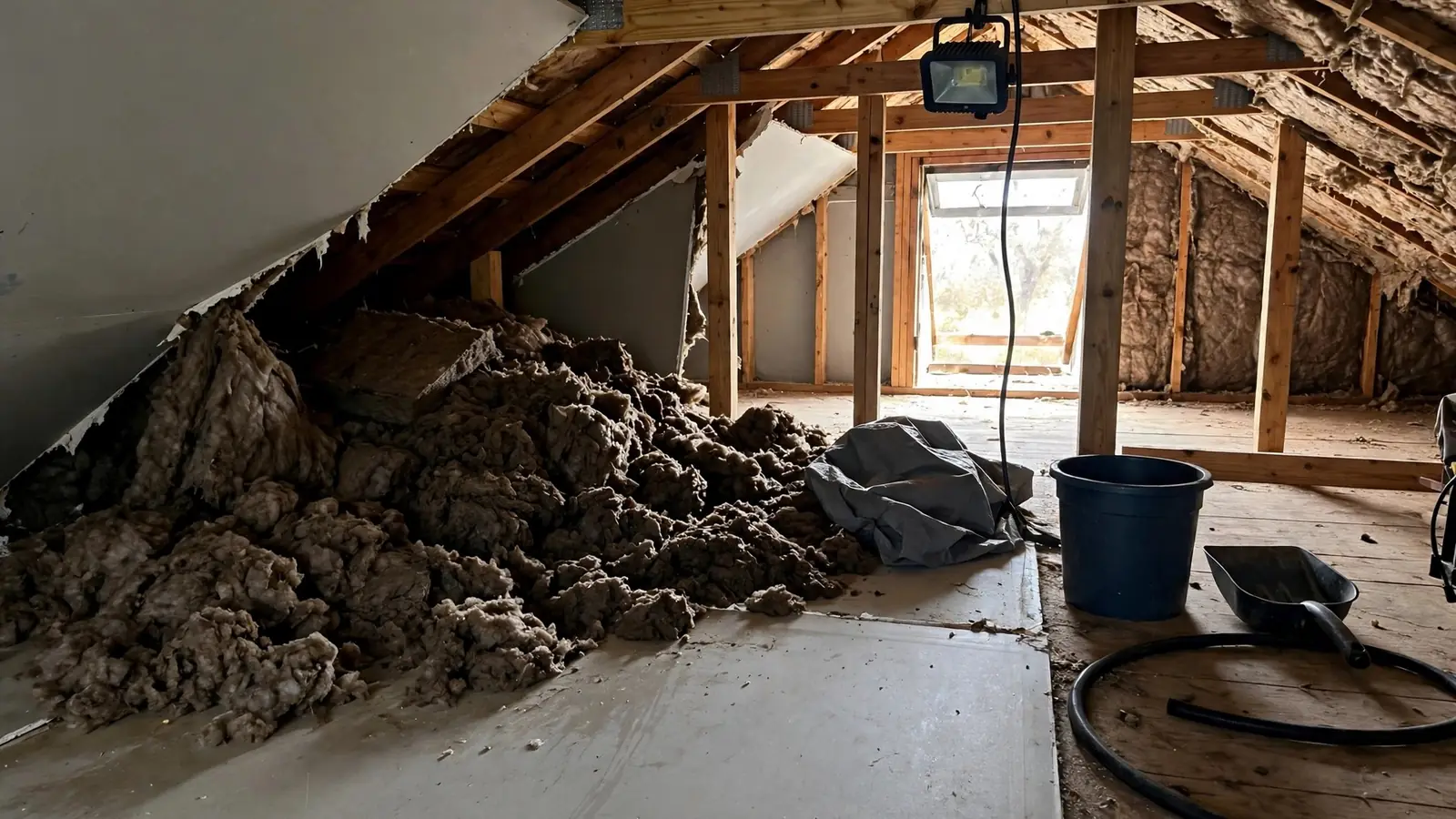
Attic water from HVAC condensate lines or roof leaks after spring hail is another local pattern. It soaks blown insulation, which then sits on the ceiling drywall and keeps it wet. Drying a ceiling usually means removing the wet insulation from above first.
Materials
Drying different materials
Every material gives up water at a different speed. These notes explain why some areas finish days after others.
- Hardwood floorsWood swells across the grain and cups as the bottom takes on water. Drying mats under suction pull moisture back out through the boards. Many cupped floors flatten as they dry, so sanding or replacement decisions wait until readings are steady.
- Tile on a slabCeramic and porcelain tile do not absorb much, but the grout and thinset can, and water under tile has to work its way out slowly. Readings at grout lines tell the story.
- Luxury vinyl plankClick-together plank floats over a pad or film. Water trapped underneath has almost no route out, so planks near the wet zone are often lifted, dried and reinstalled if they lock back together cleanly.
- Plaster and masonryDense materials hold water deep inside and dry slowly. Older plaster walls downtown may take days longer than drywall in a newer home.
- Cabinet boxesParticleboard cabinet bases soak up water and swell at the bottom edge. Removing the toe kick and drilling small holes in the base lets air through; swollen boxes rarely return to shape.
- Studs and platesFraming lumber can be dried in place once the drywall is opened. The bottom plate sitting on the slab is the last piece to dry.
Containment
Containment: keeping dry rooms dry
When only one end of the house is wet, plastic sheeting on poles can close off that area. It does two jobs. It stops humid air from drifting into bedrooms and closets that were never touched, and it shrinks the space the dehumidifiers have to work on, so they pull more water from the wet materials themselves.
Containment also matters for dust. Cutting drywall and pulling carpet makes a mess, and with gray or black water that dust can carry contaminants. A zipper door in the plastic lets the crew move in and out while keeping the rest of the home cleaner. Air scrubbers inside the contained space filter the air and can be set up to push it outside rather than into living areas.
Your questions
Questions worth asking about any drying plan
These questions help you understand the work and give you a record that is useful later.
- What is the dry standard?Ask which unaffected material was read and what number counts as dry.
- How many dehumidifiers, and why?The answer should relate to the size of the wet area and how much material is wet.
- Which walls will be opened?You should know before any cutting starts, and why those walls were chosen.
- How often will readings be taken?Daily checks are typical. Ask to see the log.
- What happens to contents?Find out what is being moved, where it is going and how it will be listed.
- When will the house be ready for repairs?No one can promise a day in advance, but the readings should show steady progress toward the goal.
Contents
Drying furniture, boxes and personal items
Contents need their own plan. Solid wood furniture can often be wiped, raised on blocks and dried slowly away from direct air flow, so finishes do not crack. Upholstered pieces that soaked up clean water may be dried with care, while anything soaked with gray or black water is usually not worth keeping.
Paper is the hardest. Photos, documents and books start to stick together and grow mold quickly. If they matter to you, lay photos face up to air dry, or put wet documents in sealed bags in the freezer until they can be dealt with. Tell the contractor which items are irreplaceable so they are handled first.
Why drying fails
When drying fails and what it leads to
Most problems after a water loss trace back to drying that stopped too early.
| What was skipped | What can happen later |
|---|---|
| Wall cavities never opened or vented | Mold on the back of drywall, musty odor |
| Cabinets left in place with wet bases | Swollen particleboard, odor under the sink |
| Floor covering left over a wet slab | Adhesive failure, mold under vinyl or laminate |
| No final readings recorded | Disputes with an insurer about what was dry |
| Dehumidification undersized | Damp air soaking back into materials that were dry |
Prevention
Preventing a second water loss while you dry
Before drying begins, the source has to be fixed, not just shut off. A plumber's repair to the burst line, a replaced water heater or a cleared condensate drain prevents a repeat while equipment is still running. It is worth asking the contractor to check that the water is truly off in that area before equipment is set.
After drying, a few habits help. Replace failed supply hoses in the rest of the house, not just the one that broke. Clear the HVAC condensate line each spring before cooling season starts. If the loss came from outside, look at grading and gutters near that wall so the next heavy rain moves away from the slab.
Records
The drying record and why you should keep it
A well-run drying job leaves a paper trail: a sketch of the affected rooms, the starting readings, the daily readings, the equipment that was placed and removed, and photos at each stage. That record is not busywork. It shows an insurer what was wet, why particular materials were removed and that the structure was brought back to a dry standard before it was closed up.
It also helps you later. If you sell the house, a buyer's inspector may ask about a past water loss. Being able to show that the walls and floor were measured as dry, and when, answers that question cleanly. Ask the contractor for a copy of the drying log at the end of the job and keep it with your home records.
If anything about the readings looks unclear, ask about it while the equipment is still in the house. It is much easier to dry a wall a little longer than to open it again months later.
Two-story homes
Drying two-story Mansfield homes
Many newer Mansfield houses have a second floor with bathrooms and a laundry room upstairs. When a supply line fails up there, water soaks the upstairs floor, runs through the floor system and comes out of the ceiling below, often at a light fixture or along a seam in the drywall. Two levels of the house are now wet, plus the space between them.
Drying that middle layer is the tricky part. The subfloor, joists and any insulation between floors hold water where room air cannot reach. Contractors often remove a section of the downstairs ceiling to let air in, or use cavity drying systems that push dry air into the floor space through small openings. Readings are taken from below and above until both match the dry standard.
If you see a stain on a downstairs ceiling, do not wait for it to dry on its own. Turn off the water to the upstairs fixture and call. A wet ceiling can also hold water above it; if it is sagging, keep everyone out from underneath.
FAQ
Drying questions from Mansfield homeowners
How long does structural drying take?
Most clean-water jobs take about three to five days. Hardwood, plaster, concrete and multi-room losses can take longer. Daily readings show the real timeline.
Why is the equipment so loud?
Air movers spin fast to move a lot of air across surfaces. The noise is temporary, and switching units off slows the drying.
Can I turn the air conditioning on?
Usually yes, and in summer it helps. The contractor may ask for a particular setting so the dehumidifiers and AC work together.
Do walls always need holes drilled?
No. Walls with only lower, clean-water wetting often dry with air movers alone. Holes behind the baseboard help when readings stay high.
How do I know the house is really dry?
Ask to see the final readings compared with the dry standard taken from unaffected materials. That record is your proof.
What is the difference between mitigation and restoration?
Mitigation stops and dries the damage. Restoration rebuilds what was removed. They are often handled and documented separately.
Can I call outside business hours?
Yes. Calls are answered 24/7 and connect you with an independent local contractor.
Will drying remove a musty smell?
Drying stops new growth, but an odor that remains afterward can mean mold or contamination that needs cleaning.