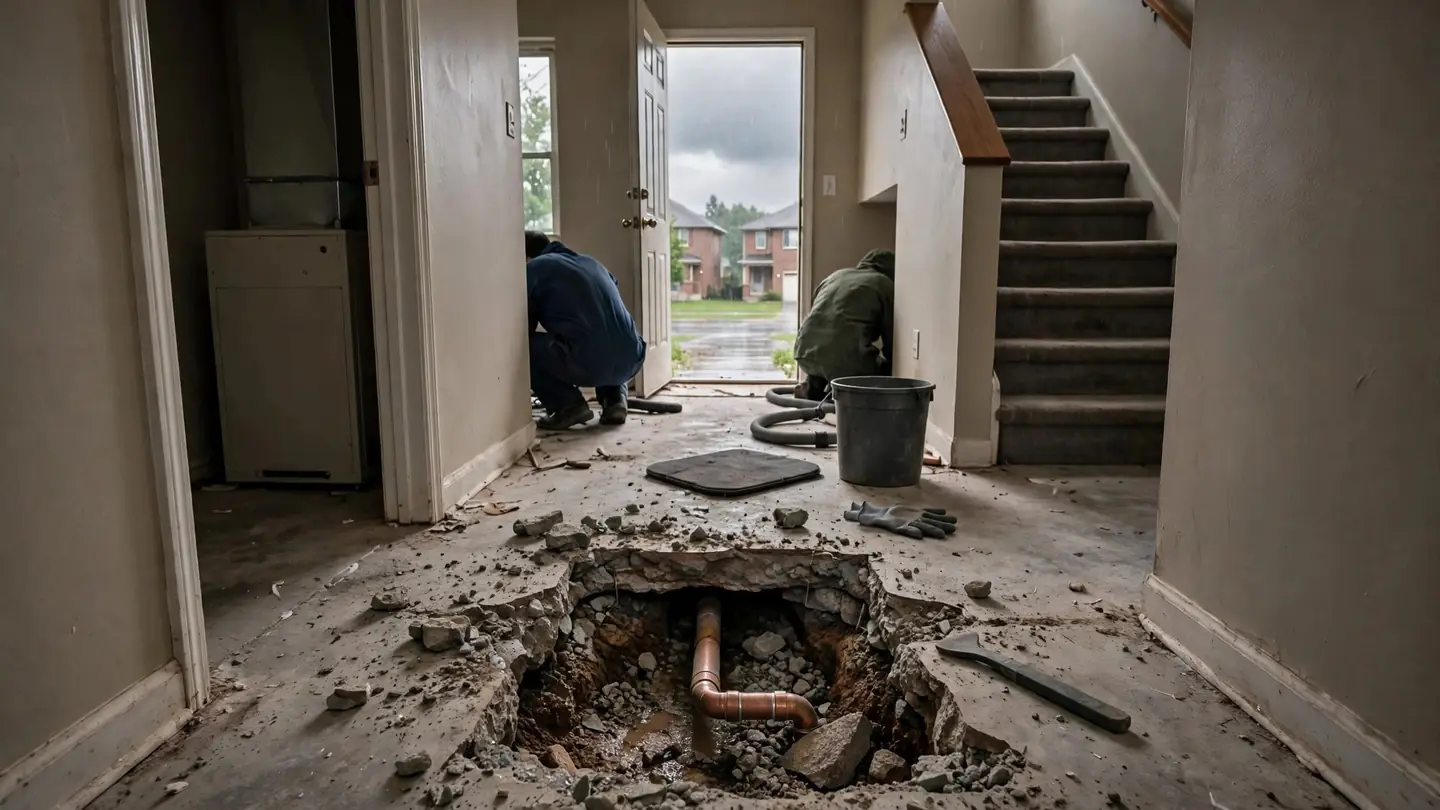
Key facts: Slab leaks
- Slab leak repairs in Texas are plumbing work done by plumbers licensed by the Texas State Board of Plumbing Examiners [1].
- North Texas clay soils swell and shrink with moisture, which can stress pipes under slabs.
- EPA guidance puts the target for drying soaked materials at one to two days to keep mold from starting [2].
- Drying is complete when readings match unaffected materials in the same home, per the IICRC S500 approach [3].
Warning signs
Signs of a slab leak
Water meter moving with everything off
The clearest test. Turn off every fixture and watch the meter for several minutes.
Warm spot on the floor
A leak in a hot water line warms the slab above it. Pets sometimes find it first.
Damp carpet or swollen baseboard in one spot
Water working up through the slab shows at the edge of a room or under carpet.
Sound of running water
Hissing under the floor when nothing is running.
Higher water bill
An unexplained jump in usage.
Cracks in tile or flooring
New cracks above a leak, sometimes with dampness.
Causes
Why slab leaks happen here
Water lines run in trenches beneath or within the slab and connect to fixtures through the floor. In older Mansfield homes those lines are often copper; newer homes typically use PEX. Copper can develop pinhole leaks over decades, especially where it was bent, where it rubs against concrete or where water chemistry wears it. PEX resists corrosion but can be damaged at fittings or by sharp debris.
The ground adds stress. North Texas clay swells when wet and shrinks when dry. As the slab and soil move through wet and dry seasons, buried lines flex. Over many years that movement can open a weak point. A leak then adds water to the soil, which can make the clay swell further in that spot.
Testing
How to check for a slab leak
These checks help a plumber, but they do not replace professional leak detection.
- 1
Turn everything off
Every faucet, the washer, dishwasher, ice maker, irrigation and the water heater fill.
- 2
Read the meter
Note the dial or digital reading, wait 15 minutes, then read again.
- 3
If it moved, isolate
Close the main valve at the house. If the meter stops, the leak is inside; if it keeps moving, it is between the meter and the house.
- 4
Check hot versus cold
Close the cold valve at the water heater. If the meter stops, the leak may be on the hot side.
- 5
Call a plumber
Leak detection tools, such as acoustic listening and pressure tests, pinpoint the spot.
Repair
Repair options a plumber may suggest
The plumber recommends the approach. The restoration contractor handles the water damage afterward.
| Approach | What it involves | When it is used |
|---|---|---|
| Spot repair | Breaking out a small section of slab to repair the line | Single leak, otherwise sound piping |
| Reroute | Running a new line through walls or the attic and abandoning the old one | Older lines or repeat leaks |
| Repipe | Replacing the home's supply lines | Widespread corrosion or multiple failures |
Drying
Drying after a slab leak
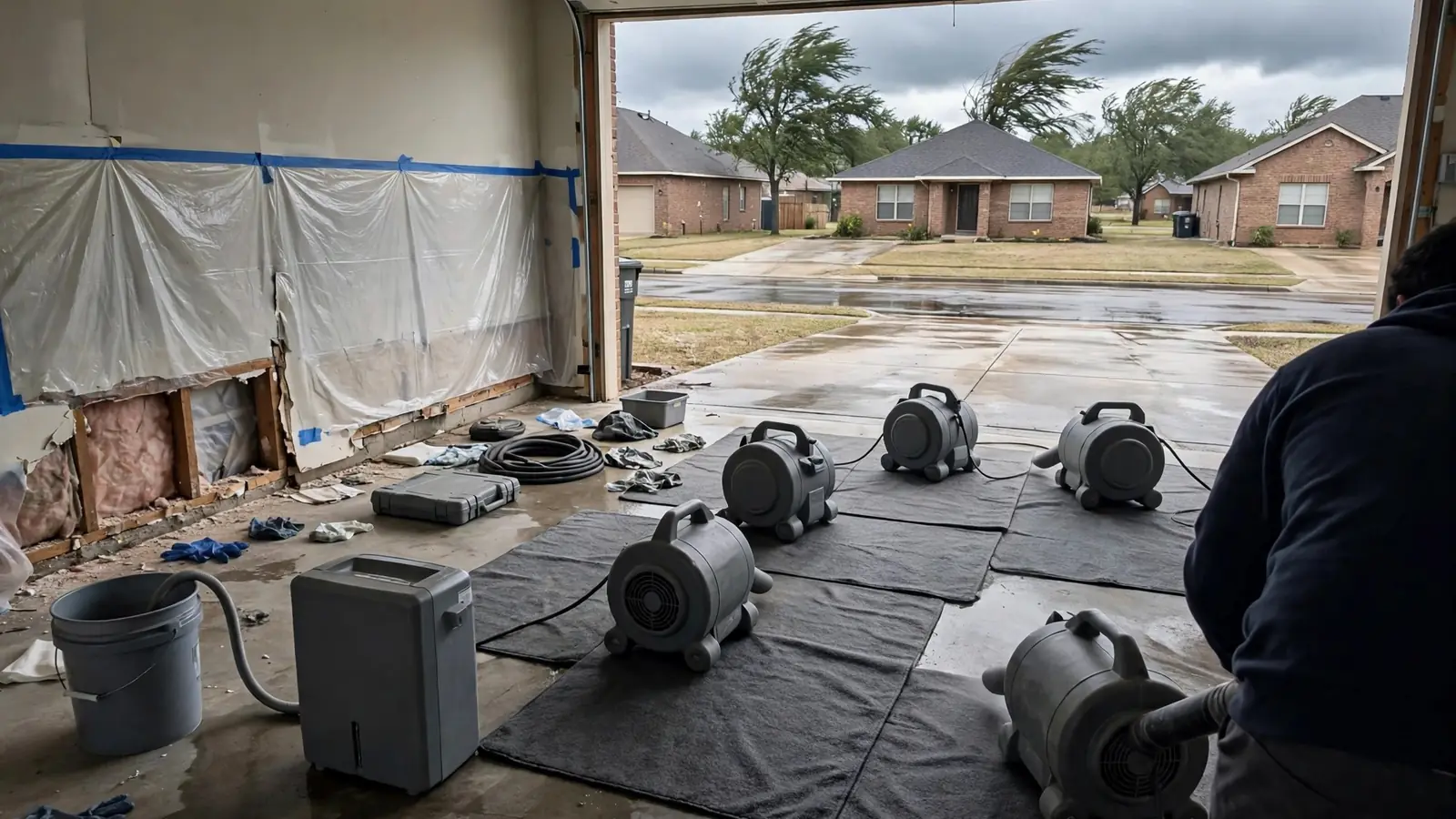
Water from a slab leak soaks the slab, the floor covering and the bottom of nearby walls. Carpet pad above the leak is usually replaced. Vinyl plank and laminate are lifted. Tile can stay if readings come down, though grout lines may hold moisture for a while.
If the slab was opened for a spot repair, the contractor dries the area around the opening before the concrete is patched. Walls near the leak may need baseboards removed and small holes drilled for cavity drying.
Slabs dry slowly. Expect several days to a week or more, with daily readings compared against unaffected areas until they match [3].
During the repair
Living with a slab leak repair
If the plumber opens the slab, expect noise, dust and a section of floor out of use for a few days. Furniture near the repair area should be moved, and the contractor may set up plastic containment to keep concrete dust out of the rest of the house. Once the pipe is repaired and tested, the trench is backfilled and patched with new concrete, which needs time to cure before flooring goes back down.
A reroute is less disruptive to floors but involves small openings in walls or ceilings where the new line runs. Those openings are patched and painted afterward. In either case, ask whether the water can be restored to the rest of the house while the repair is under way, so you are not without water longer than necessary.
Finally, keep watching the water meter for a few weeks after the repair. A meter that is still creeping with everything off can mean a second leak elsewhere in the system.
Insurance
Insurance and slab leaks
Policies vary on slab leaks. Many cover the water damage to the house from a sudden leak and sometimes the work of reaching the pipe, while the pipe repair itself may or may not be included. Long-running leaks can be treated differently. Read your policy and ask your insurer how they handle it.
Keep the plumber's report describing the leak's location and cause, along with photos and the drying records. They support your claim.
Other sources
Telling a slab leak from other water
Not every damp floor is a slab leak. Water from a shower pan, a toilet seal or a refrigerator line can also spread under flooring and look the same. The water meter test separates them: if the meter stops when every fixture is off, the water is probably coming from a fixture that leaks only when used. A wet patch that grows after a shower, for example, points to the shower rather than the slab.
FAQ
Slab leak questions
Can a slab leak be fixed without breaking the floor?
Sometimes. Rerouting the line through walls or the attic avoids opening the slab.
Will my flooring need replacing?
Carpet pad usually does. Vinyl plank may be reinstalled. Tile often stays if it dries well.
Does a slab leak damage the foundation?
A long leak can affect the soil under the slab. A foundation specialist can assess any cracks or movement.
Who do I call first?
A plumber to find and repair the leak, then a restoration contractor to dry the damage.
Why do slab leaks keep happening in my house?
Older copper lines may have multiple weak points. Ask a plumber about rerouting or repiping.
Can I call the evening I find a slab leak?
Yes. The line is answered around the clock, so you can talk to a contractor the night you find the leak.