Key facts: Flood Cleanup
- Floodwater from outside is treated as grossly contaminated (Category 3) under the IICRC S500 approach [1].
- The National Weather Service tracks a river gauge on Walnut Creek near Mansfield and issues flood warnings for it [2].
- Standard homeowners policies generally do not cover flooding from outside; flood coverage comes from a separate policy such as the NFIP [3].
- CDC guidance is to avoid contact with floodwater where possible and to wear boots and gloves during cleanup [4].
The basics
Why flood cleanup is its own kind of job
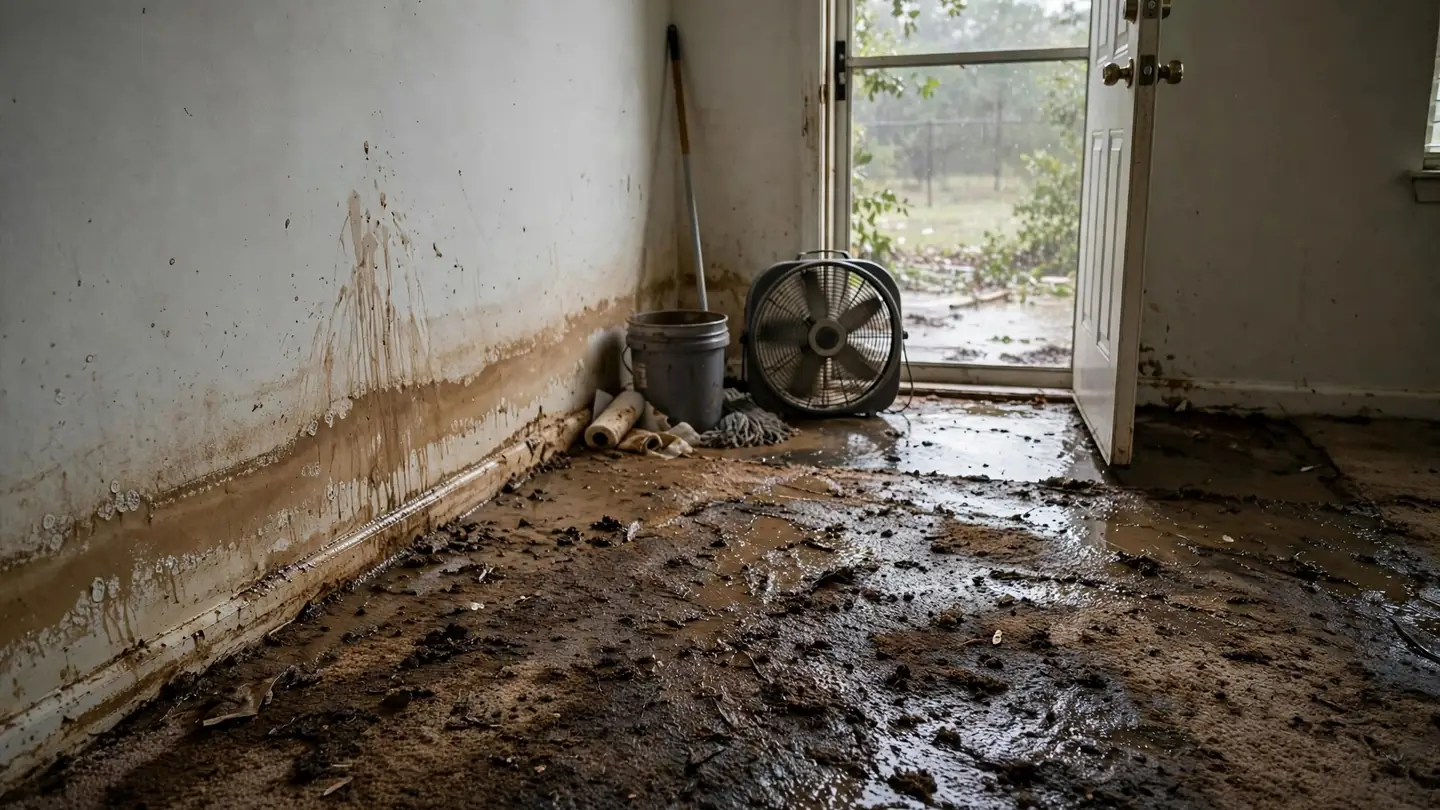
Inside water and outside water are treated very differently. A supply line break sends clean water through a house. A flood sends whatever was on the ground outside: lawn chemicals, animal waste, gasoline from the street, and sometimes sewage from overwhelmed lines. Anything porous that it soaks is usually treated as contaminated and removed rather than dried in place.
Flood cleanup therefore puts more weight on removal and sanitizing. Carpet, pad, the lower drywall, insulation and many soft furnishings go. Hard surfaces are cleaned and disinfected. Only then does drying start. The order matters, because drying contaminated materials in place just leaves dried contamination behind.
How it enters
How storm water gets into Mansfield homes
Over the threshold
Heavy rain that pools on a patio or driveway that slopes toward the house can run straight under exterior doors.
Through a garage
Water flowing down the street or driveway enters the garage and seeps under the door into the house.
Wind-driven rain
Strong storms push water through window frames, weep holes and gaps in siding, wetting walls from the inside.
Hail-damaged roofs
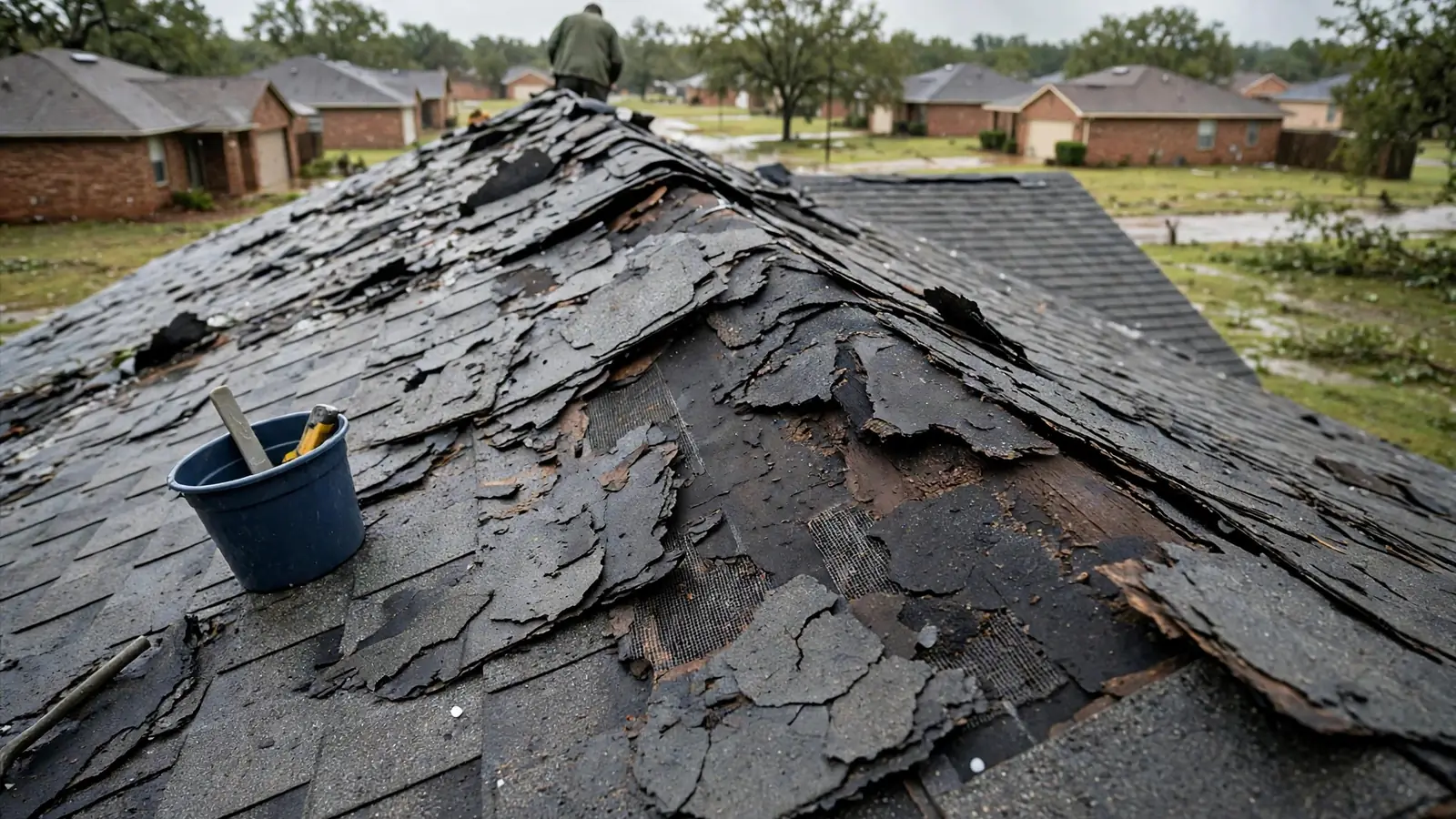
Spring hail breaks shingles and opens paths for rain into attics and ceilings.
Creek and channel overflow
Homes near Walnut Creek and its tributaries can see rising water when the creek leaves its banks.
Backed-up drains
When storm and sewer systems are overwhelmed, water can come up through floor drains and toilets.
Local flooding
Walnut Creek and Mansfield's flood history
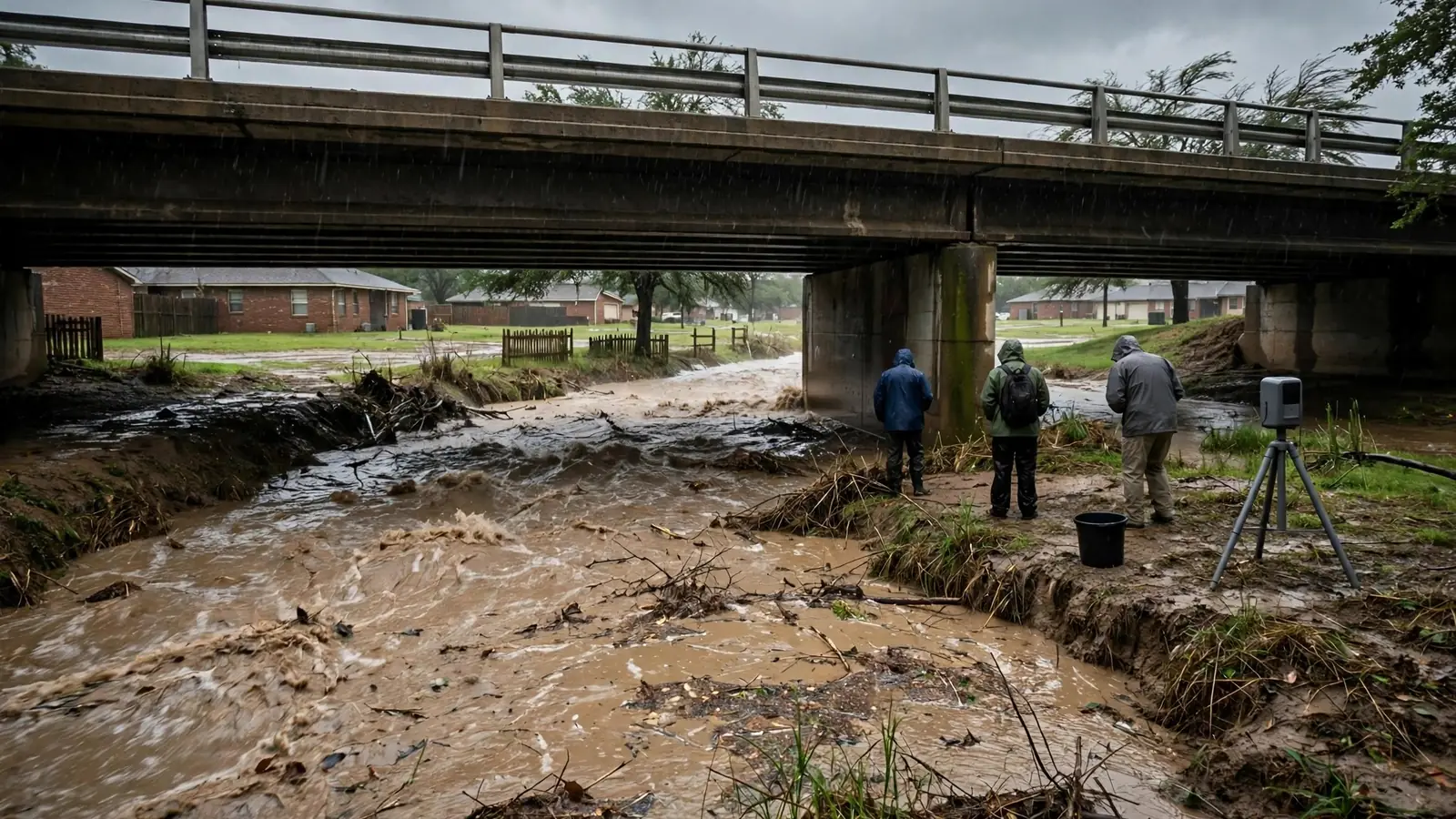
Walnut Creek runs through the heart of Mansfield toward Joe Pool Lake. The National Weather Service monitors it with a river gauge near the city and issues flood warnings when it rises. In 2023 the NWS Fort Worth office lowered some flood stage levels for that gauge, so warnings now begin at levels that better match local impacts [2].
When the creek rises, parts of the Walnut Creek Linear Trail and nearby streets can close until the water drops. Local reporting has also described drainage fixes the city made after past flooding problems in some neighborhoods [5].
Most Mansfield homes are not on the creek itself, and most storm water damage here comes from heavy rain overwhelming yards, gutters and street drains rather than from the creek. Either way, the cleanup rules for outside water are the same.
Testing
How a contractor assesses flood damage
- 1
Confirm it is safe to enter
Power, gas and structural concerns are checked first. Sagging ceilings and warped floors are noted.
- 2
Mark the water line
The highest point the water reached on walls is measured and photographed. It sets the line for removal.
- 3
Check for hidden wicking
Meters find how far above the visible line the walls absorbed water.
- 4
Classify the water
Outside water is treated as Category 3, which shapes every later step [1].
- 5
Inventory contents
Damaged items are photographed and listed before removal for your insurer.
- 6
Plan removal and drying
The contractor explains what will be removed, how surfaces will be cleaned and how drying will run.
Diagnosis
Flood depth and what usually has to go
These are starting points. The contractor's readings decide the actual cut line.
| Water depth inside | Usually removed | Usually cleaned and kept |
|---|---|---|
| Under one inch | Carpet and pad, baseboards, bottom of drywall | Tile, hard furniture, cabinets if not swollen |
| One to twelve inches | Drywall up to a cut line above the wicking, insulation, lower cabinets | Studs after cleaning, metal and glass items |
| Over a foot | Most finishes up to the cut line, appliances, upholstered furniture | Framing after cleaning and drying |
| Ceiling leak from storm | Wet insulation and stained ceiling drywall | Joists and roof deck once dried |
The job
How flood cleanup is carried out
The first task is removing water and the mud it left. Silt settles in a slick layer on floors and in the bottom of wall cavities. Shovels and squeegees move the heavy material, then extraction and pressure washing of hard surfaces take care of the rest.
Next comes demolition of contaminated porous materials. A flood cut is made a set distance above the highest wicking point, and everything below it comes out: drywall, insulation and baseboard. Carpet and pad go to the curb. Kitchen and bathroom base cabinets are checked; particleboard that has swollen is usually replaced.
With the walls open, every surface the water touched is cleaned and treated. Studs, bottom plates and the slab are scrubbed with a cleaning solution, rinsed where needed and then treated before drying. Air scrubbers run during this stage to keep dust and spores down.
Only after cleaning does structural drying begin. Because walls are already open, flooded homes often dry faster than you might expect. The final readings, and a check that no odor remains, signal that rebuilding can start.
Comparison
Flood versus other water losses
| Question | Indoor clean-water leak | Outside floodwater |
|---|---|---|
| Water category | Usually Category 1 | Category 3 |
| Carpet | Sometimes dried in place | Removed |
| Drywall | May dry in place | Cut out above the wicking line |
| Cleaning step | Light | Full cleaning and treatment of surfaces |
| Insurance | Often a homeowners policy question | Usually a separate flood policy question |
DIY vs pro
What you can do yourself and what to leave
Once the water has gone down and power is off in the affected area, you can start sorting. Move undamaged belongings to a dry room. Photograph everything that was wet, including serial numbers on appliances. Throw out perishable food that the water reached. Open the house only if outdoor air is drier than indoor air; on a humid Mansfield day, it may not be.
Leave cutting drywall and pulling cabinets to the contractor, both because floodwater contamination needs proper protective gear and because insurers often want to see the damage before it is removed. Do not use bleach on porous materials in the hope of keeping them. It does not make contaminated drywall or pad safe to keep, and mixing cleaning products can release harmful gases.
The visit
A flood cleanup visit from start to finish
- 1
Call and arrival
You call, explain what happened and arrange a time with the contractor on the call.
- 2
Safety and assessment
The contractor checks hazards, marks the water line and takes readings and photos.
- 3
Plan and agreement
You agree the scope directly with the contractor before work begins.
- 4
Removal and cleaning
Mud, contaminated materials and debris come out; surfaces are cleaned and treated.
- 5
Drying
Equipment runs until readings meet the dry standard.
- 6
Hand-off to rebuild
You receive photos and drying records and can move on to repairs.
Mansfield specifics
Storm seasons in Mansfield
North Texas gets its heaviest rain in spring and again in fall, and storms here can drop a lot of water in a short time. Flash flooding on streets and in low-lying yards is more common than creek flooding, and it can push water into homes that have never flooded before.
Hail is the other spring hazard. A storm that breaks shingles or skylights may not cause a leak the same day. Ceiling stains often show up during the next rain, days or weeks later. If your area was hit by hail, look in the attic after the next storm.
Winter brings fewer storms but a different risk. During the February 2021 freeze, pipes burst across Texas and the thaw caused widespread indoor flooding [6]. That water is clean at first, but if left for days it is treated like contaminated water.
Insurance
Flood insurance and paperwork
Most standard homeowners policies exclude flooding from rising surface water, and cover only certain sudden water events from inside the home. Flood coverage usually comes from a separate policy, often through the National Flood Insurance Program, and new policies typically have a waiting period before they take effect [3]. Knowing which kind of loss you have shapes how you file.
Whatever the coverage, photos, a contents list and the contractor's drying records help the claim along. The Texas Department of Insurance has consumer guidance on claims and how to raise a complaint if you run into problems [7]. See the adjuster guide on this site for a step-by-step approach.
Prevention
Reducing flood risk at your Mansfield home
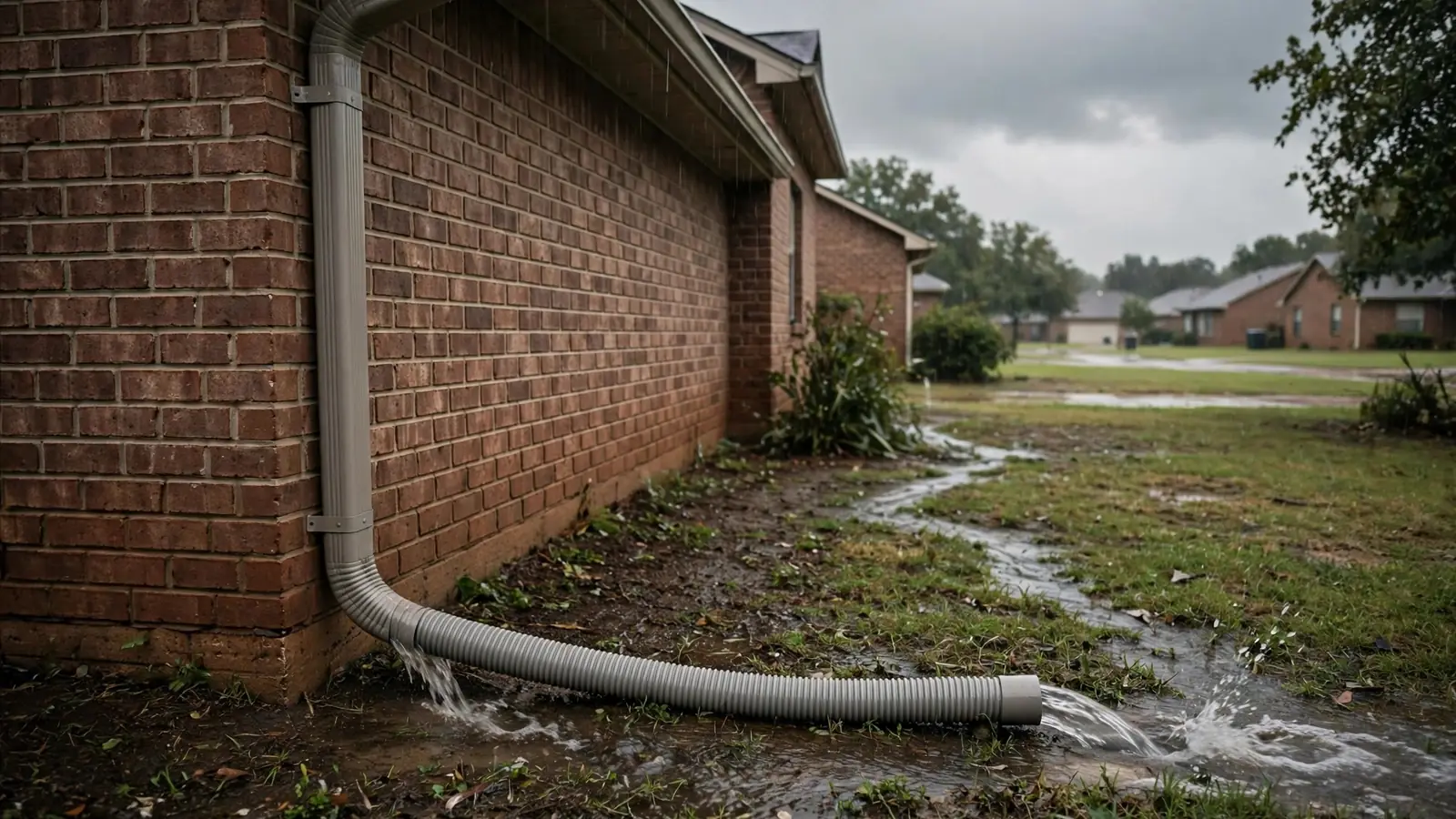
Most flood prevention around a house is about grading and drainage. Soil and mulch beds should slope away from the slab for several feet. Downspouts should carry water well away from the foundation, not dump it at the corner of the house. Clear gutters before spring storm season.
If water has ever come in under a door, look at the threshold and the slope of the patio or driveway outside it. A small change to grading or a drain in the right place can stop a repeat.
To see whether your property is in a mapped flood zone, look up your address on FEMA's Flood Map Service Center [8]. Maps do not show every risk, especially street flooding, but they are a useful starting point.
- Slope soil away from the slab
- Extend downspouts away from the house
- Clean gutters before spring storms
- Check your FEMA flood zone
Cleaning
Cleaning surfaces the floodwater touched
Cleaning after a flood is slow and thorough, because anything left behind feeds odor and mold later.
- Slab floorsOnce carpet and pad are gone, the bare concrete is scrubbed, rinsed and wet-vacuumed. Tack strip nails and staples are pulled so nothing is left to trap silt.
- Wall framingStuds and bottom plates are brushed and cleaned on every face the water reached, including inside corners where mud collects.
- Cabinets and built-insSolid wood and metal can often be cleaned and kept. Any surface that has delaminated or swollen is replaced instead.
- Doors and trimHollow-core interior doors that soaked up water at the bottom edge often swell and are replaced. Painted solid trim may be cleaned and reused.
- Ductwork and registersFloor registers and low supply runs are opened and checked for silt. Flex duct that took on water is usually replaced.
- Hard contentsGlass, ceramic and metal items can be washed and disinfected. Anything with crevices that hold dirt needs extra care.
Contents
Belongings after a flood: keep, clean or discard
Your insurer may want to see items before they are thrown out, so photograph and list everything first.
| Item | Usual outcome | Notes |
|---|---|---|
| Mattresses and box springs | Discard | Cannot be cleaned through to the core |
| Upholstered furniture | Usually discard | Some high-value pieces may go to specialist cleaners |
| Solid wood furniture | Often clean and dry | Dry slowly to avoid cracking |
| Clothing and linens | Often wash | Wash hot where the fabric allows |
| Books and papers | Freeze or discard | Freeze important documents until they can be dried properly |
| Electronics | Have checked | Do not power on until a technician has looked |
| Food, medicine, cosmetics | Discard | Anything the water touched is unsafe |
Garages
Garages, cars and outbuildings
In many Mansfield houses the garage is the lowest point and the first place water collects. It often holds the water heater, a second refrigerator, tools and stored boxes. Flood cleanup there focuses on the drywall shared with the house, the appliances standing in the water and anything stored on the floor.
Gas water heaters and furnaces whose burners or controls went underwater should not be relit until a qualified technician has checked them. Vehicles that sat in rising water need their own insurance claim and inspection. Sheds and detached workshops are usually cleaned last, after the house, unless they hold items you need right away.
Widespread flooding
When a whole street floods at once
A single heavy storm can push water into many homes in the same part of Mansfield on the same night. When that happens, contractors get a wave of calls at once. Calling early helps, and so does having clear information ready: how deep the water got, which rooms are affected and whether the power is off.
In the meantime, keep doing the safe things you can do. Take photos, move valuables to a dry room upstairs or on high shelves, and keep the house as closed up as you can if the outdoor air is humid. If a neighbor has a contractor on site, it is fine to ask how their cleanup is going, but every house needs its own assessment.
After widespread flooding, the city may post guidance on debris collection and permits for repairs. Check the City of Mansfield website for current instructions before putting large piles at the curb [11].
Related problems
Problems that follow a flood
- Mold growthWet materials that are not removed or dried quickly can grow mold within days [9]. Larger mold jobs in Texas are regulated by TDLR [10].
- OdorSilt and contamination left inside wall cavities causes a lingering smell. Thorough cleaning before drying prevents it.
- Damaged HVAC ductworkFloor or low ducts that took on water may need cleaning or replacement.
- AppliancesWater heaters, washers and furnaces that were submerged should be checked by a qualified technician before use.
Quality check
Signs a flood cleanup was done well
Use this list as a check before the rebuild starts. If any point is unclear, ask the contractor to show you.
- No odor in the opened wallsBefore new drywall goes up, the open cavities should smell like clean wood and concrete, not earth or sewage.
- Clean bottom platesThe lumber sitting on the slab should be free of visible silt, including in the corners and around electrical boxes.
- Readings at the dry standardFraming and slab readings should match the dry reference taken from an unaffected area.
- Photos at every stageYou should have pictures of the damage, the removal, the cleaned surfaces and the drying set-up.
- A clear list of what was removedEvery material and item taken out should be listed so it can be replaced later.
Silt
Mud, silt and the smell they leave behind
After outside water drains away, it leaves a film of fine silt on every surface it touched and a thicker layer in low corners, inside wall cavities and under appliances. That silt carries the same contamination as the floodwater did. As it dries, it turns to dust that can be breathed in and spread through the house on shoes and air currents.
Removing it properly takes time. Hard surfaces are shoveled, squeegeed and rinsed, then wiped and cleaned again. Wall cavities are opened so the silt at the bottom of each stud bay can be reached. Air scrubbers run throughout. A house that has had its silt thoroughly removed smells clean once it dries; a house where silt was left behind smells earthy and sour for months.
If you are going through a flooded house on your own before help arrives, wear an N95 mask or better when sweeping dried mud, and keep children and pets out of the area.
Staying at home
Living in a home during flood cleanup
Whether you can stay at home depends on how much of the house took on water and how many rooms are contained for cleaning. If the kitchen, bathrooms or bedrooms are inside containment, most families stay elsewhere for a few days. If the water reached only a garage and one room, staying is often fine as long as the work area is closed off and air scrubbers are running.
Plan for noise, restricted rooms and equipment that runs day and night. Keep a bag of essentials in a dry room, and ask the contractor each day which parts of the house are safe to use. Children and pets should stay out of the work area until cleaning and disinfection are finished.
FAQ
Flood cleanup questions in Mansfield
Is rainwater that came under the door really contaminated?
Yes. Once it flows across a yard, patio or driveway, it picks up soil, chemicals and bacteria, and it is treated as Category 3 [1].
Can flooded carpet be saved?
Carpet and pad soaked by outside floodwater are usually removed. Some area rugs can be professionally cleaned, depending on the material.
How high will the walls be cut?
Above the highest point the walls absorbed water, which meters find. That is often higher than the visible water line.
Does homeowners insurance cover flooding?
Usually not for rising outside water. Flood coverage normally comes from a separate policy [3]. Check your own policy.
Should I wait for the adjuster before cleanup starts?
Do not let the house sit wet. Photograph everything, then start mitigation; insurers generally expect you to prevent further damage.
How do I know if my street floods?
Check FEMA flood maps, ask neighbors and watch NWS flood warnings for Walnut Creek near Mansfield [2].
Can I call during a storm at night?
Yes. During and after storms, calls are answered 24/7 and connect you with an independent contractor serving Mansfield.
Are the people who come out employed by this site?
No. This is a referral line. Your call connects to an independent contractor who does the work.
Sources and citations
- [1]IICRC S500 Standard for Professional Water Damage Restoration
- [2]NWS Fort Worth: Walnut Creek near Mansfield flood stage update (2023)
- [3]FloodSmart (National Flood Insurance Program)
- [4]CDC: Floods and your health
- [5]NBC DFW: Past flooding problems lead to fixes in Mansfield
- [6]Wikipedia: February 2021 North American winter storm
- [7]Texas Department of Insurance: home insurance consumer help
- [8]FEMA Flood Map Service Center
- [9]EPA: A Brief Guide to Mold, Moisture and Your Home
- [10]TDLR: Mold Assessors and Remediators
- [11]City of Mansfield, Texas