
Key facts: Insurance adjusters
- Most homeowners policies expect you to take reasonable steps to prevent further damage after a loss.
- Standard homeowners policies generally exclude flooding from outside; flood coverage comes from separate policies such as the NFIP [1].
- The Texas Department of Insurance offers consumer help and a complaint process for insurance problems [2].
- Drying records showing moisture readings over time help explain why materials were removed [3].
Reporting
Reporting a water damage claim
- 1
Stop the water and make it safe
Your first duty is to prevent further damage. Shut off the water and start drying.
- 2
Photograph before cleanup
Wide and close photos of every wet room, the source and damaged items.
- 3
Call your insurer or agent
Report the loss, note the claim number and ask how they want you to proceed.
- 4
Ask about mitigation
Confirm that emergency drying can go ahead before the adjuster visits; most insurers expect it.
- 5
Keep damaged items and parts
Keep the failed hose or fitting. Ask before throwing out large items.
- 6
Write down every conversation
Date, name and what was said.
The adjuster's view
What the adjuster is looking for
The adjuster's job is to work out what happened, whether it is covered under your policy and what it will take to put things right. For water damage, the key questions are usually where the water came from, whether it was sudden or gradual, how long it ran and how far it spread.
That is why the source matters so much. A supply line that burst yesterday is usually handled differently from a slow leak that ran for months, and outside floodwater is usually a separate type of coverage altogether [1]. Photos of the source, the plumber's report and the contractor's moisture readings all help answer those questions.
Records
Records to keep
| Record | Why it helps |
|---|---|
| Photos and video before cleanup | Shows the damage as it was |
| Plumber's report and failed part | Explains the cause and timing |
| Moisture map and daily readings | Shows what was wet and when it was dry |
| List of removed materials | Explains what was taken out and why |
| Contents list with photos | Supports the claim for belongings |
| Receipts for emergency expenses | Supports additional living or emergency spending if covered |
| Notes of every call | Keeps track of what was agreed |
The visit
Preparing for the adjuster's visit
Walk the house before the visit with your photos and notes. Make a list of every affected room and what was damaged in it. Have the contractor's readings and any plumber's report ready. If the contractor can be there, they can explain the drying plan and why particular materials were removed.
During the visit, point out everything, including damage that is less obvious, such as wet cabinets, swollen trim or a ceiling stain in another room. Ask what the adjuster needs from you next and when you can expect to hear back.
Ask for a copy of the adjuster's estimate when it is ready, and compare it with the contractor's scope. Differences are common and are usually worked out by sharing more information.
Coverage
Common questions during a claim
Many policies cover sudden water damage from inside the home but exclude gradual leaks, wear and tear, and outside flooding. Some require a separate endorsement for sewer or drain backup. Mold coverage is often limited. Read your policy's water damage sections, or ask your agent to explain them.
If you need to live elsewhere while the house is dried and repaired, ask whether your policy includes additional living expenses and what records they want.
Contents
Your contents claim
Belongings are usually handled separately from the building. Make a room-by-room list of damaged items with a description, approximate age and where you bought them if you know. Photos of each item, including labels and serial numbers, help. Receipts, bank statements and even old photos of rooms showing the items can support the list.
Ask your insurer whether they want to see damaged items before they are thrown out. Some items, such as electronics or furniture, may be inspected. Others, such as food or soaked mattresses, usually just need photos. Keep a copy of the full list for yourself.
Some policies pay the depreciated value of items first and the rest once they are replaced. Ask how your policy works so you know what to keep, such as receipts for replacements.
Coordination
Working with the contractor and the adjuster together
The restoration contractor and the adjuster are looking at the same house from different sides. The contractor's moisture map and daily log show what was wet, what was removed and when the structure was dry. Sharing those records early helps the adjuster understand the scope and reduces back-and-forth.
Any agreement for the work is between you and the contractor. Read it before you sign, and ask how the contractor communicates with insurers and whether you will get copies of everything they send.
Disputes
If you disagree with a decision
Start by asking the adjuster to explain the decision in writing and to identify the policy language behind it. Often the gap is missing information, which more photos, readings or a plumber's report can fill.
If you still disagree, your policy may describe an appraisal process for disputes about the amount of a loss. The Texas Department of Insurance has consumer guidance and accepts complaints about insurers [2]. You can also speak with an attorney or a licensed public adjuster for advice.
Organization
Keeping the claim organized
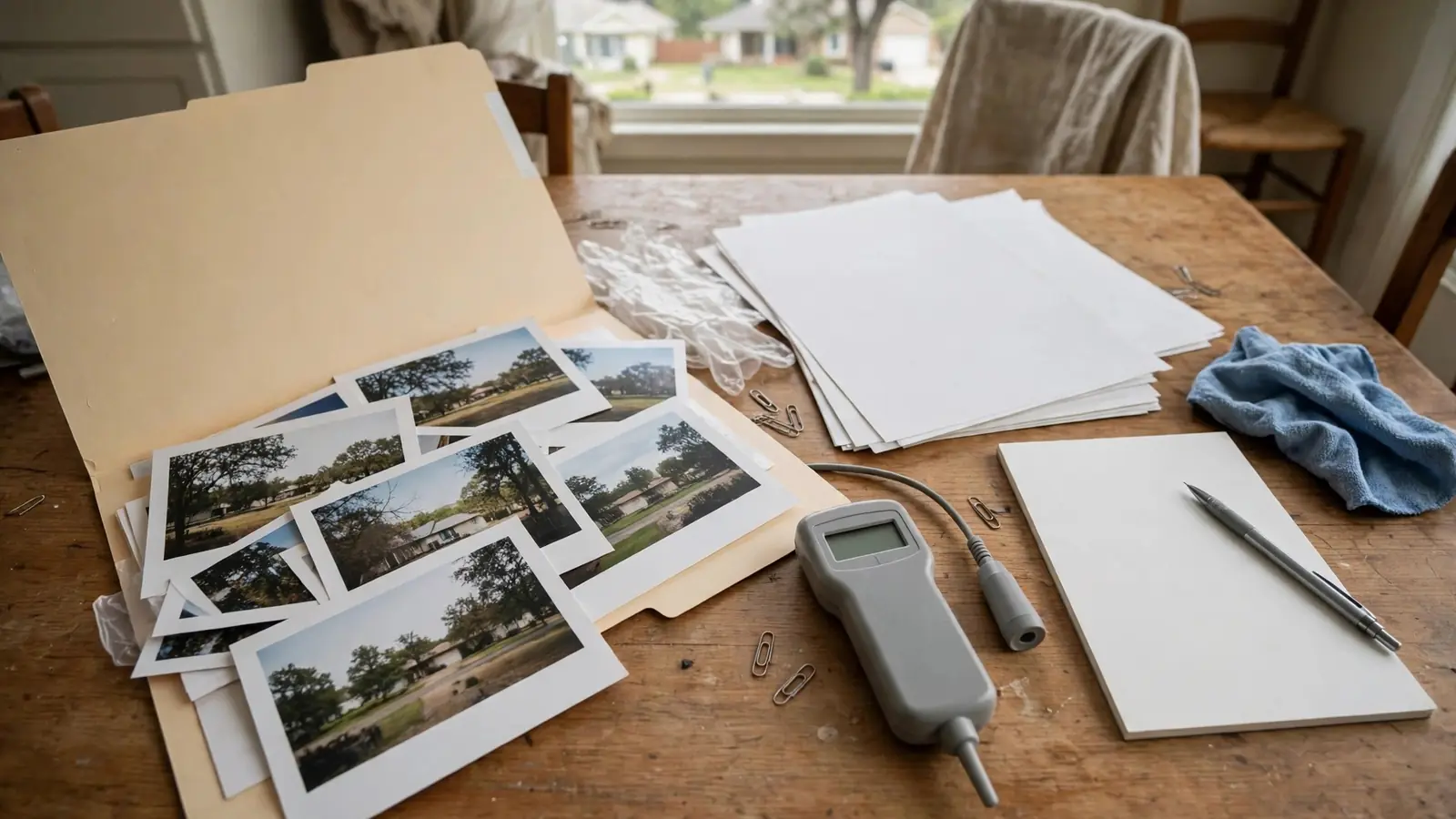
A single folder, paper or digital, keeps everything together: the claim number, the adjuster's name and contact details, your photos, the contractor's readings, receipts and notes of each conversation. Date every entry. When a question comes up weeks later, you can answer it in minutes instead of searching through emails and texts.
FAQ
Insurance adjuster questions
Should I start cleanup before the adjuster comes?
Yes, after photographing. Insurers generally expect you to prevent further damage.
Is flooding from a storm covered by my homeowners policy?
Usually not if it is rising outside water. Flood coverage is normally separate [1].
Does insurance cover sewage backup?
Many policies need a sewer or drain backup endorsement. Check yours.
What if the adjuster's estimate is lower than the contractor's?
Share the contractor's scope, readings and photos with the adjuster and ask what is missing.
Who can help if I have a problem with my insurer?
The Texas Department of Insurance offers consumer help and a complaint process [2].
Does this site handle insurance claims?
No. It is a call-in referral line. Your claim is between you and your insurer.