Key facts: Water Damage Cleanup
- Wet building materials and furnishings should be dried within 24 to 48 hours to help prevent mold growth [1].
- The IICRC S500 standard groups water by contamination: clean (Category 1), significantly contaminated (Category 2) and grossly contaminated (Category 3) [2].
- Most Mansfield homes sit on concrete slabs, so water spreads sideways under flooring rather than draining into a basement.
- Calls to this line are answered 24/7 and connect you to an independent local contractor.
The basics
What water damage cleanup actually covers
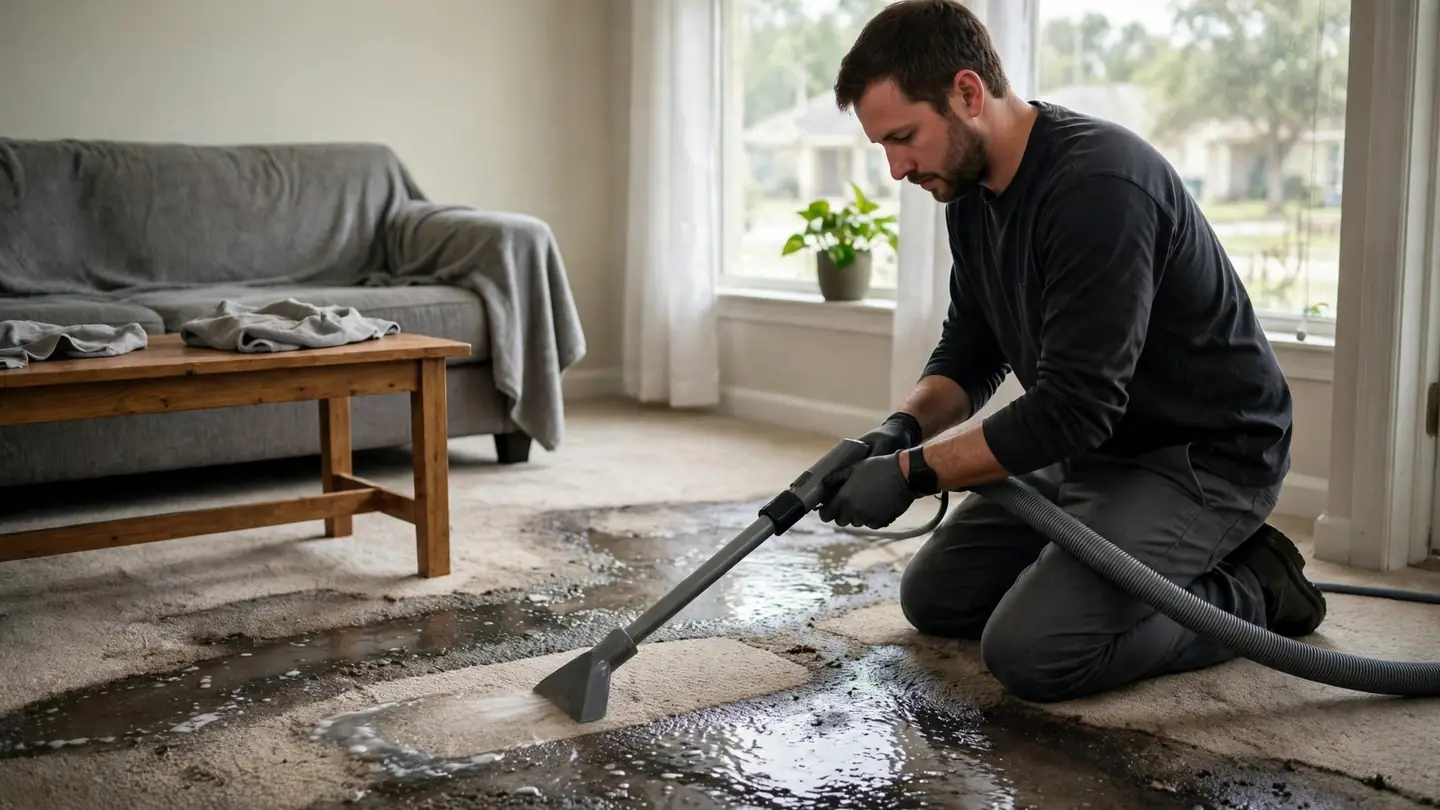
Cleanup is the hands-on stage that comes right after the source is stopped. It means pulling standing water off floors, lifting or cutting out materials that cannot be saved, moving furniture and boxes out of the wet zone, and getting air moving so evaporation can begin. It is not the same as rebuilding. New drywall, paint and flooring come later, once readings show the structure is dry.
In Mansfield the job usually starts on a slab. Water from a failed supply line or an overflowing tub runs across tile or laminate, slips under baseboards and soaks the tack strip and pad beneath the carpet next door. Because there is no basement for it to fall into, it travels sideways through the house, so the wet area is often two or three times larger than the puddle you first saw.
A careful cleanup crew treats that hidden spread as the main problem. Pumps and extraction wands handle what you can see. Moisture meters, thermal cameras and a written moisture map handle what you cannot. The aim is a clear line between materials that are wet and materials that are dry, so that only what is truly ruined gets removed.
Warning signs
Signs a room needs more than towels and a fan
Carpet that squelches a day later
Pad under carpet acts like a sponge. If it still feels wet after a day, the pad and possibly the tack strip are holding water against the slab.
Baseboards pulling away
Particleboard and MDF baseboards swell and split when they wick water. Swelling usually means the drywall behind them is wet too.
A line on the drywall
A faint tide mark a few inches above the floor shows how far water climbed by capillary action inside the wall.
Musty smell after two days
An earthy odor suggests microbial growth has started somewhere you cannot see, often inside a wall cavity or under a vanity.
Laminate or vinyl plank cupping
Click-lock floors trap water underneath. Edges that rise or seams that open are signs the subfloor side is wet.
Ceiling stain below a bathroom
In two-story homes a stain on the ceiling under a bath or laundry room means water has crossed a floor system and needs opening up.
Why materials fail
Why drywall and pad fail so quickly
Gypsum drywall is a chalky core wrapped in paper. The paper is food for mold once it stays damp, and the core loses strength when soaked. Water climbs inside the board by wicking, which is why a half inch of water on the floor can wet the wall a foot or more up.
Carpet pad is open foam. It soaks up water fast and gives it back slowly, and it sits right on the slab where there is no air movement. Most restorers replace wet pad rather than trying to dry it, especially if the water was anything other than clean supply water.
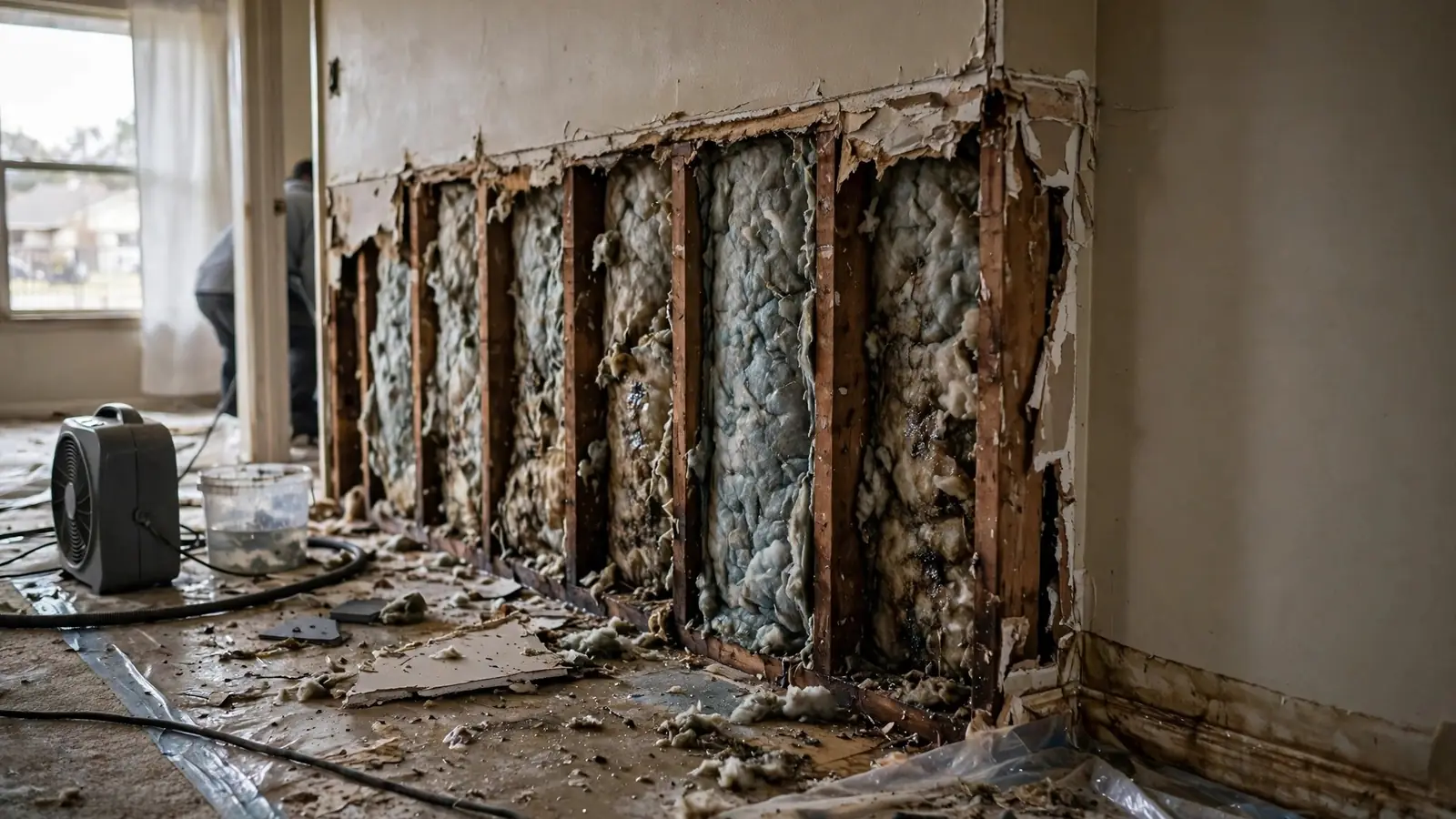
Insulation inside exterior walls behaves the same way. Fiberglass batts sag and hold moisture against the studs and sheathing. Once a wall has been wet from the inside long enough to soak the insulation, opening it up is usually the only way to dry it properly.
Testing
How a contractor tests what is wet
Good cleanup is measured, not guessed. Here is the usual testing sequence on a Mansfield call.
- 1
Find and stop the source
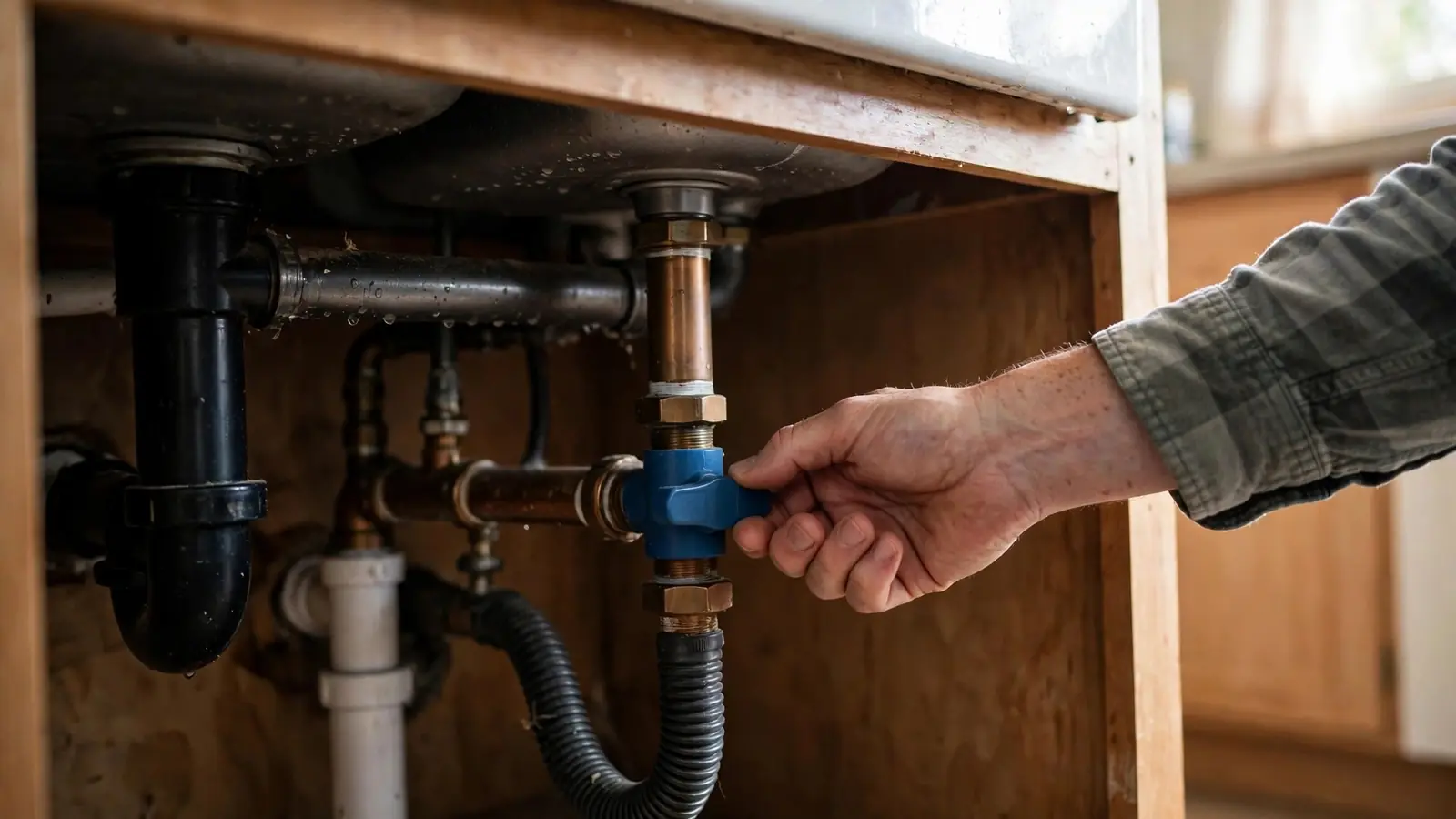
The first question is always whether water is still coming in. A shut-off at the fixture, the main valve near the curb or a plumber's repair comes before any drying.
- 2
Map with a non-invasive meter
A pinless meter is swept across floors and walls to find the edges of the wet area without making holes.
- 3
Confirm with pin readings
Where readings are high, pin meters give a number for wood and drywall. Those numbers become the drying goal.
- 4
Check hidden cavities
Thermal imaging helps spot cool, wet patches behind cabinets and in ceilings. A small inspection hole may be cut to confirm.
- 5
Record a dry standard
An unaffected wall in another room gives the target reading. Materials are not considered dry until they match it.
- 6
Photograph everything
Before anything is removed, photos and readings document the condition of each room for you and your insurer.
Diagnosis
Matching the problem to the cleanup step
These are patterns, not diagnoses. The contractor on your call will want to see the house before deciding.
| What you see | Likely cause | Usual cleanup step |
|---|---|---|
| Water across kitchen tile and into the den carpet | Dishwasher or refrigerator supply line | Extract, pull pad, float or remove carpet, dry base of cabinets |
| Wet hallway outside a bathroom | Toilet supply or wax ring failure | Assess category, remove baseboard, dry wall bottoms |
| Puddle in the garage spreading into the house | Water heater leak or failure | Extract, dry the shared wall and adjoining room |
| Ceiling drip below the attic | HVAC condensate pan or line overflow | Open stained ceiling, dry insulation and joists |
| Wet carpet along an exterior wall after a storm | Wind-driven rain or a failed door threshold | Extract, check wall cavity and sill plate |
| Water coming up through the floor | Possible slab leak in a supply line | Plumber locates leak first, then cleanup and drying |
The job
How the cleanup itself is done
Extraction comes first. Truck-mounted or portable extractors pull water out of carpet and off hard floors far faster than any shop vacuum. On carpet, a weighted extraction tool squeezes water out of the pad from above, which is sometimes enough to save carpet that was wet with clean water for only a short time.
Next is removal of what cannot be dried in place. That often means wet pad, swollen baseboards, the lower two feet of saturated drywall and soaked insulation. A flood cut is a straight line cut along the wall at a set height above the water line, which keeps later repairs tidy and lets air into the cavity.
Contents are moved out of the wet zone or lifted onto blocks. Wood furniture legs sitting in water stain and swell, and boxes stored on the floor collapse. Anything that needs cleaning, packing or drying off site is listed and photographed.
Finally the room is set up to dry. Air movers sweep the surfaces, dehumidifiers pull the moisture out of the air and, where needed, specialty tools push dry air into wall cavities or under cabinets. That set-up is where cleanup hands off to drying, which is explained on the water mitigation and drying page.
Water types
Clean, gray and black water
Water gets dirtier with time and with what it touches. Clean water left two or three days can be treated as gray [2].
| Category | Typical Mansfield source | What it means for cleanup |
|---|---|---|
| Category 1 (clean) | Supply line, water heater, rain through a fresh roof opening | Many materials can be dried in place if treated quickly |
| Category 2 (gray) | Washing machine discharge, dishwasher drain, aquarium | Porous materials such as pad are usually removed; surfaces cleaned |
| Category 3 (black) | Sewage backup, toilet overflow with waste, outside floodwater | Porous materials removed; protective gear and cleaning protocols required |
DIY vs pro
What you can safely do before help arrives
If the water is clean and the power to the wet area is off, there is useful work you can do while you wait. Move rugs, electronics and paper off the floor. Wipe up what you can from hard floors. Put aluminum foil or plastic under furniture legs so finishes do not bleed into wet carpet. Open interior doors to let air move.
Leave the bigger jobs alone. Pulling up wall-to-wall carpet can tear it and hide where the water went. Running a household vacuum on a wet floor is an electrical hazard. Heating the house hard can speed up mold if the air is not also being dried. And if the water came from a toilet, a drain or outside, avoid touching it without gloves and boots.
Take photos before you move anything, and again as you go. A quick video walking through each wet room, showing the source and the floor, is one of the most helpful things you can give an adjuster.
The visit
What to expect when the contractor arrives
- 1
Walk-through
The contractor walks the house with you, asks when the water started and checks the source is under control.
- 2
Safety check
Power to wet areas, slip hazards, and anything in the water such as sewage or chemicals are dealt with first.
- 3
Readings and photos
Meters and photos set the starting point for every room.
- 4
Explanation of the plan
You are told what needs to be removed, what can be dried in place and roughly how the work will go.
- 5
Your go-ahead
Work starts only once you agree to it with the contractor on site. Any paperwork is between you and that contractor.
- 6
Daily checks
Most drying set-ups are checked each day, with new readings logged until the dry standard is reached.
Mansfield specifics
What is different about water damage in Mansfield
Mansfield has grown quickly, and most of its houses were built in the last few decades on concrete slabs over the expansive clay found across much of North Texas. Clay swells when wet and shrinks when dry, so long leaks under or beside a slab can matter for more than the flooring. A contractor will note any cracks or movement they see, though structural assessment belongs to a foundation specialist.
The weather adds its own pattern. Spring storms bring heavy rain and hail that open up roofs, and the city sits along Walnut Creek, which the National Weather Service gauges near Mansfield because it floods [3]. In winter, a hard freeze like February 2021 split pipes in attics and exterior walls across Texas [4]. Each of those sends water into a house a different way, and cleanup follows the path the water took.
Many Mansfield homes keep the water heater in the garage and run HVAC equipment in the attic. A failed tank floods the garage and the shared wall into the house. A clogged condensate line drips quietly onto a ceiling for days. Both are common calls here, and both need the ceiling or wall opened rather than just dried from the room side.
Prevention
Keeping the next leak small
Most indoor water damage starts at a handful of connections. Braided steel supply lines on toilets, sinks and the washer last longer than rubber, and an annual look at each one takes minutes. Water heaters have a lifespan; once a tank is past the age printed on its label, watch the base for rust and damp.
Know where the main shut-off is. In many Mansfield neighborhoods it sits in a box near the curb or in the garage. A leak detector under the water heater, washer and kitchen sink takes little effort to place and can turn a flooded room into a damp spot.
For storm season, keep gutters and downspouts clear so rain moves away from the slab, and check that the ground slopes away from the house.
- Replace rubber supply hoses with braided lines
- Find and label the main water shut-off
- Put leak sensors near the water heater and washer
- Keep downspouts discharging away from the slab
Repair or replace
Dry in place or remove?
Restorers decide case by case. This table shows the usual starting point, not a rule.
| Material | Clean water, caught early | Gray or black water, or long exposure |
|---|---|---|
| Carpet | Often dried in place after extraction | Usually removed |
| Carpet pad | Usually replaced | Removed |
| Drywall | Can often be dried with air movers and cavity drying | Cut out above the wet line |
| Hardwood flooring | May be saved with specialty floor drying mats | Often removed if cupped or contaminated |
| Laminate and vinyl plank | Often removed to dry the slab beneath | Removed |
| Cabinets | Toe kicks removed and bases dried | Particleboard boxes often replaced |
| Insulation | Fiberglass in a wet wall is usually removed | Removed |
Related problems
Problems that often come with a water loss
Water rarely arrives alone. A leak that runs for more than a day or two can leave mold on the back of drywall and baseboards, which needs its own careful removal. In Texas, mold assessment and remediation above certain sizes is regulated by the Texas Department of Licensing and Regulation, which keeps a public list of license holders [5].
A slab leak is a separate problem with its own guide on this site. If the source is a pipe under the floor, cleanup can only start once a plumber has found and repaired it. Older homes may also hold materials such as asbestos in some floor tiles or textured ceilings, which should not be sanded or broken without testing [6].
Room by room
Room-by-room cleanup notes
Each part of a house holds water in its own way. These are the spots a contractor checks first in a typical Mansfield home.
- KitchensThe toe kick under base cabinets is pulled so air can reach the floor beneath. Dishwashers and refrigerators are slid out to check the wall and floor behind them.
- BathroomsVanities and tub surrounds hide water well. Grout lines and the floor at the base of the toilet are checked with a meter, not just by eye.
- Laundry roomsA burst washer hose can release a lot of water quickly. The wall shared with the garage or a bedroom is usually wet from both sides.
- GaragesWater heater leaks spread under the door into the house. The garage slab dries on its own, but the drywall on the house side often needs opening.
- Bedrooms and closetsClosets packed with shoes and boxes trap moisture. Emptying them is the first step so the floor and lower walls can dry.
Timeline
How long cleanup takes and what slows it down
The extraction and removal part of a typical clean-water cleanup in a Mansfield house is often done in a single long visit. What takes longer is the drying that follows, usually several days, and the wait for repairs after that. Knowing the stages helps you plan where to sleep, where to cook and how to keep children and pets away from the equipment.
A few things stretch the timeline. A source that is not fully fixed keeps re-wetting the area. Water that sat for several days before anyone found it has usually spread further and grown dirtier. Tile or vinyl plank laid over a slab traps moisture underneath and slows drying. Humid summer weather means dehumidifiers have more work to do, especially if doors and windows are opened often.
Things that speed it up are simple: calling early, having the source repaired quickly, clearing contents out of the wet rooms and leaving the equipment running as placed. The contractor will tell you if they need anything else from you, such as a warmer thermostat setting or a room kept closed.
FAQ
Water damage cleanup questions from Mansfield homeowners
How fast should cleanup start after a leak?
As soon as the source is stopped. The EPA advises drying wet materials within 24 to 48 hours to help prevent mold, so the first day matters most [1].
Can I stay in the house during cleanup?
Usually yes for clean-water losses, though air movers and dehumidifiers are loud and run day and night. Sewage or large losses may make some rooms off limits.
Will my carpet have to be thrown out?
Not always. Carpet wet with clean water and extracted quickly can sometimes be dried. The pad underneath is usually replaced.
Why cut the drywall if it looks fine?
Drywall can look dry on the surface while the inside of the wall stays wet. Meter readings, not appearance, decide whether it stays.
Does homeowners insurance cover water cleanup?
It depends on your policy and the cause. Sudden accidental leaks are often treated differently from long-term seepage or outside flooding. Ask your insurer, and see the adjuster guide on this site.
Who does the work when I call?
Your call connects to an independent local contractor. This site is a referral line and does not do the work itself.
Is someone available at night?
Yes. Calls are answered 24/7, so you can reach a contractor at night, on weekends and on holidays.
What should I photograph?
The source, every wet room, damaged items and the water line on walls, before anything is moved and again during the work.
Sources and citations
- [1]EPA: A Brief Guide to Mold, Moisture and Your Home
- [2]IICRC S500 Standard for Professional Water Damage Restoration
- [3]NWS Fort Worth: Walnut Creek near Mansfield flood stage update (2023)
- [4]Wikipedia: February 2021 North American winter storm
- [5]TDLR: Mold Assessors and Remediators
- [6]EPA: Asbestos in your home