Key facts: The first hour
- The EPA advises drying wet materials within 24 to 48 hours to help prevent mold growth [1].
- Never enter standing water if electrical outlets or appliances may be energized.
- Water from outside or from sewage is treated as contaminated (Category 3) and needs protective gear [2].
- Photos taken before anything is moved are among the most useful records for an insurance claim.
Checklist
Minute by minute: what to do first
Work through these in order. Skip any step that is not safe for you to do.
- 1
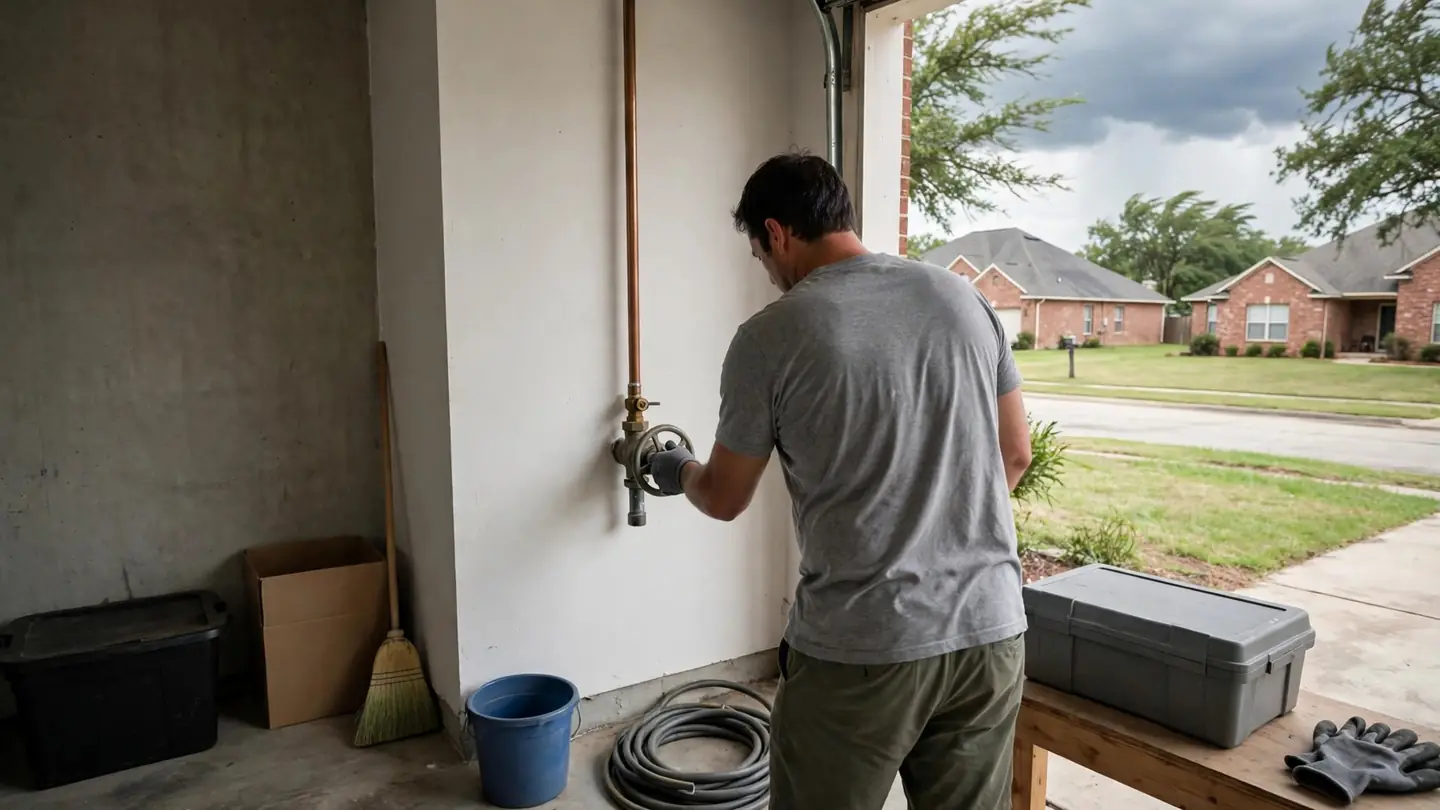
1. Stop the water
Close the valve at the fixture if you can reach it. If not, shut off the main. In most Mansfield homes it is in a box near the curb, in the garage or where the line enters the house.
- 2
2. Make it safe
If water is near outlets, cords or appliances, turn off the breaker for that area from a dry spot. If you cannot reach the panel without standing in water, leave the room.
- 3
3. Check what kind of water it is
Clean water from a supply line is less risky. Water from a toilet, drain, sewer or outside is contaminated; wear boots and gloves or stay out of it.
- 4
4. Photograph everything
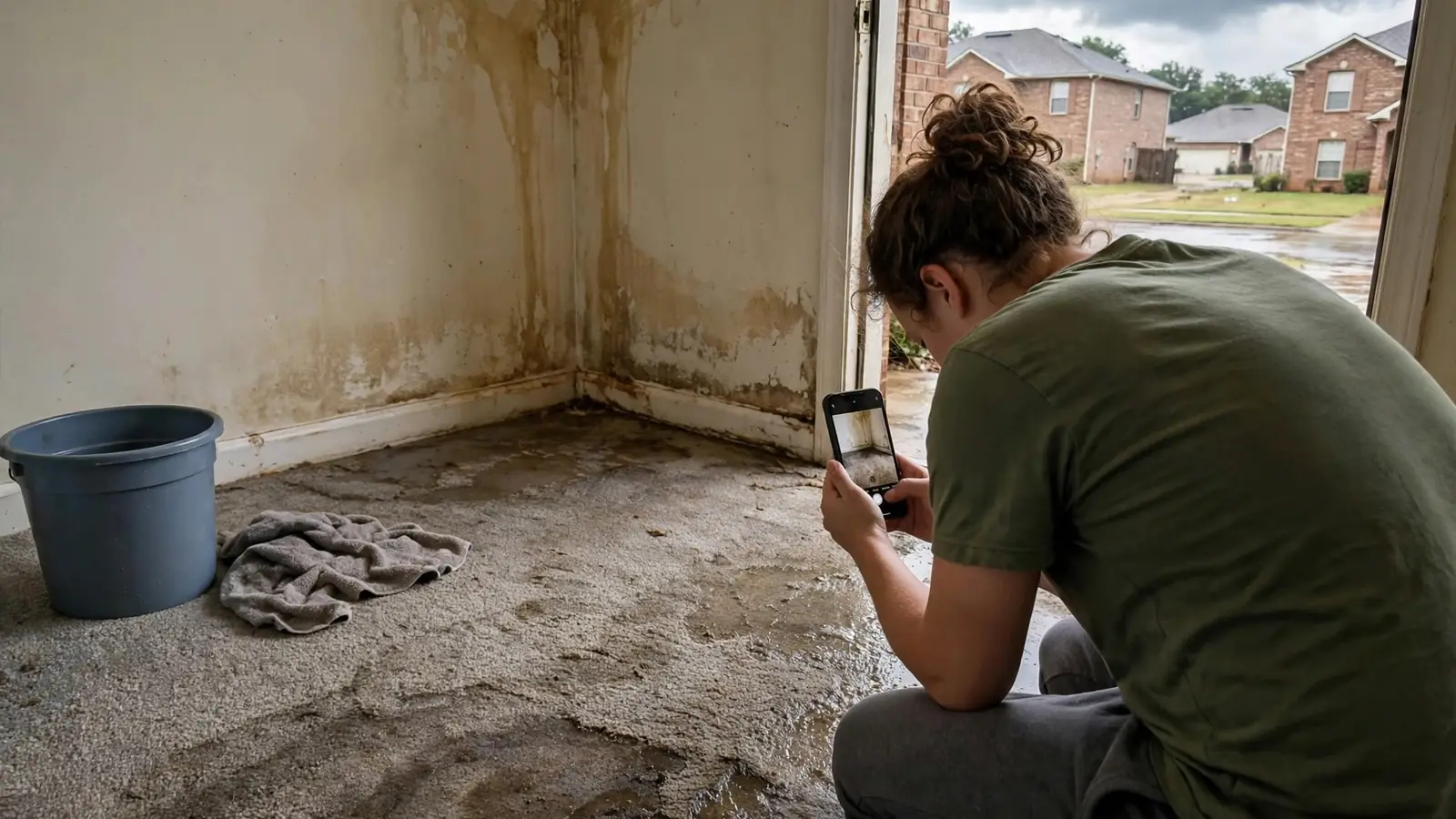
Take wide photos of each wet room, then close-ups of the source, the water line on walls and damaged items. A slow video walk-through is ideal.
- 5
5. Protect what you can
Move electronics, rugs, papers and small furniture to a dry room. Put foil or plastic under legs of furniture you cannot move.
- 6
6. Remove standing water you can safely reach
Use towels, a mop or a wet vacuum rated for water (never a household vacuum) on clean water only.
- 7
7. Call for help
Call a plumber if the source needs repair, and a restoration contractor to extract and dry. Then call your insurer.
- 8
8. Start air moving
Open interior doors. Run air conditioning in summer. Avoid opening windows if outdoor air is humid.
Why it matters
Why the first hour matters
Water moves. In a slab house it spreads under flooring and into the bottom of walls, and drywall pulls it upward. The longer it sits, the larger the wet area and the more materials need removing rather than drying. Clean water also gets dirtier over time as it picks up whatever it passes through.
Mold is the other clock. The EPA's guidance is to dry wet materials within 24 to 48 hours to help prevent mold growth [1]. That window starts when the water arrives, not when you find it, which is why stopping the source and getting drying started quickly makes such a difference.
A fast first hour does not mean doing everything yourself. It means stopping the water, keeping people safe and getting the right help on the way.
Shut-offs
Where to find your shut-offs
Find these before you need them. Label the main valve so anyone in the house can use it.
| Shut-off | Where it usually is |
|---|---|
| Main water valve | In a box near the curb or meter, in the garage or where the line enters the house |
| Toilet | Small valve on the wall behind or beside the toilet |
| Sinks | Two valves inside the cabinet below |
| Washing machine | Two valves on the wall behind the washer |
| Water heater | Valve on the cold supply line at the top of the tank |
| Refrigerator | Valve under the kitchen sink or behind the fridge |
Documentation
What to photograph and why
Insurers and contractors both rely on photos taken before anything changes. Start wide: each room from the doorway, showing the floor and walls. Then go close: the failed pipe or fixture, the water line on drywall, swollen baseboards, wet carpet and any damaged furniture or electronics.
Include serial numbers on damaged appliances, and photograph the contents of closets and cabinets before you empty them. If water is still running when you arrive, record a short video of it.
Keep everything in one album on your phone and back it up. It becomes the start of your claim and your own record of what happened.
Mistakes
What not to do
Do not use a household vacuum on wet floors; it is an electrical hazard and is not designed to pick up water. Do not turn on ceiling lights or fans in a room where the ceiling is wet. Do not pull up wall-to-wall carpet by yourself, which can tear it and spread contamination if the water was dirty.
Avoid throwing anything out before it has been photographed and listed. Avoid running the heat high in a wet house without dehumidification, which can make conditions better for mold. And do not wait to see whether it dries on its own: walls and floors can feel dry long before they are.
Next steps
After the first hour
Once the water is stopped and help is on the way, the next phase is extraction and drying. A restoration contractor will measure moisture, remove what cannot be saved and set up equipment to dry the house over the next few days. The services on this site explain each part in more detail.
Call your insurer once you have photos. Ask how they want the claim reported and whether they want to see the damage before materials are removed. The guide to working with your insurance adjuster covers that conversation step by step.
Keep a short note of the times: when you found the water, when you shut it off and when you called. Insurers often ask.
FAQ
First-hour questions
Should I turn off the electricity?
Turn off power to the wet area at the breaker if you can do so from a dry spot. If the panel itself is in water, stay away and call for help.
Can I use a shop vacuum?
A wet/dry vacuum rated for water is fine on clean water. Do not use a household vacuum.
How long do I have before mold starts?
The EPA recommends drying within 24 to 48 hours to help prevent mold [1].
Should I call my insurer or a contractor first?
Stop the water and make the house safe first, then call for cleanup to prevent further damage, then notify your insurer.
Is it safe to stay in the house?
Often, for a clean-water leak in one area. Not if there is sewage, floodwater, a sagging ceiling or electrical risk.
Can I call right now, even at night?
Yes. Calls to this line are answered 24/7 and connect to an independent local contractor.