Key facts: Walnut Creek Valley
- The National Weather Service monitors a river gauge on Walnut Creek near Mansfield and lowered some of its flood stage levels in 2023 [1].
- When the creek floods, the road named for it and sections of the linear trail beside it have been closed until the water went down [2].
- Many homes in Walnut Creek Valley were built between 1970 and 1999 [3].
- Outside floodwater is treated as Category 3 (grossly contaminated) under the IICRC S500 approach [4].
Covered area
Covered streets and surroundings
Calls from Walnut Creek Valley can be connected to an independent restoration contractor serving this part of Mansfield.
- ZIP 76063Walnut Creek Valley and the neighborhoods along Walnut Creek and its side channels in central Mansfield.
- Nearby landmarksThe Walnut Creek Linear Trail, Walnut Creek Drive and the parks that line the creek corridor.
- HousingMostly single-family brick homes on slabs, built from the 1970s through the 1990s, with some newer infill.
About the area
A neighborhood shaped by a creek
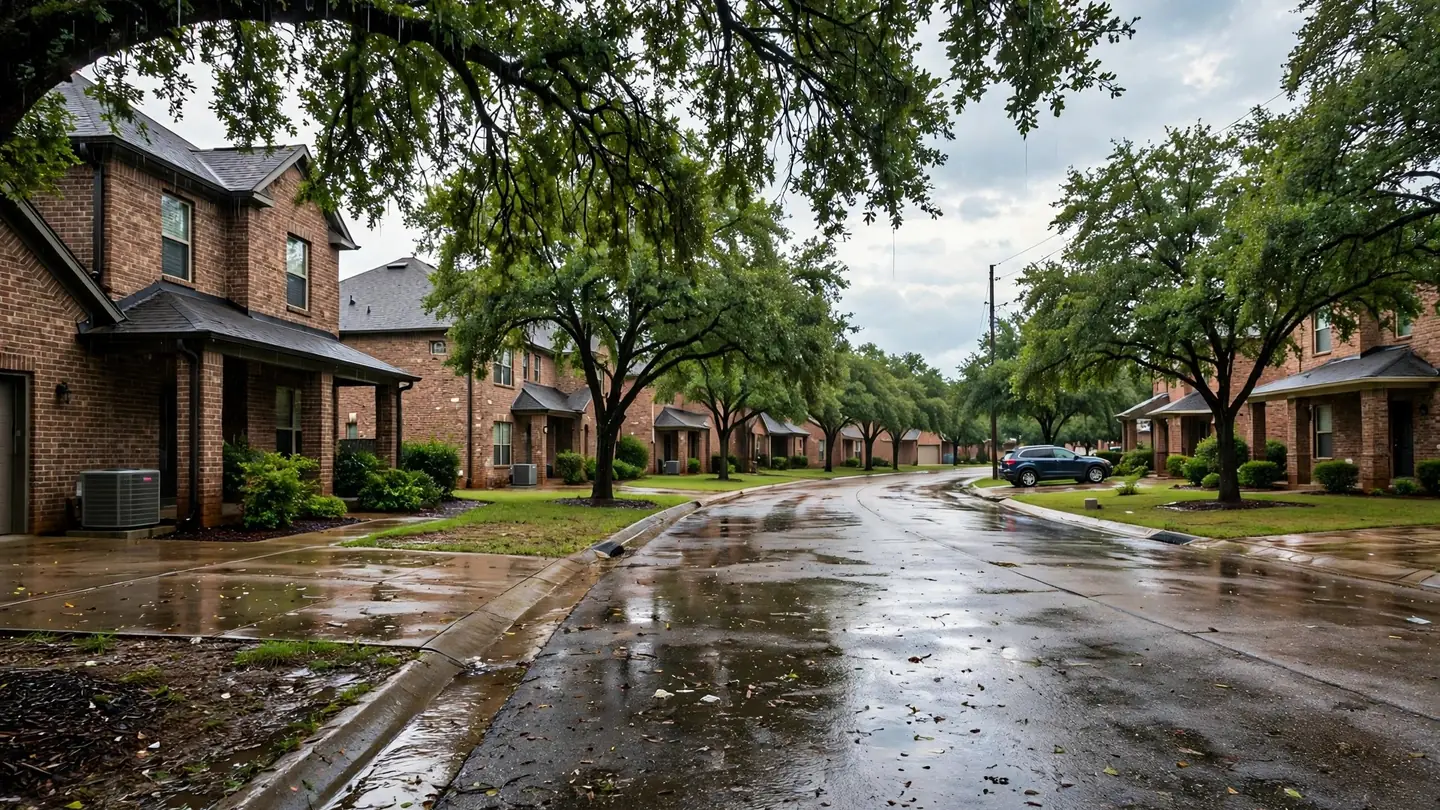
Walnut Creek is the main stream running through Mansfield. It rises to the west, flows east through the middle of the city and continues toward Joe Pool Lake. Along the way it collects runoff from streets, yards and parking lots across a large part of town. Parks and a linear trail follow much of its route through the city.
Walnut Creek Valley grew up beside it. Real estate data describes most homes here as built between 1970 and 1999 [3]: brick single-story and two-story houses with attached garages, many with mature trees in the yards. Streets curve around the creek and its side channels, and some lots back onto greenbelt.
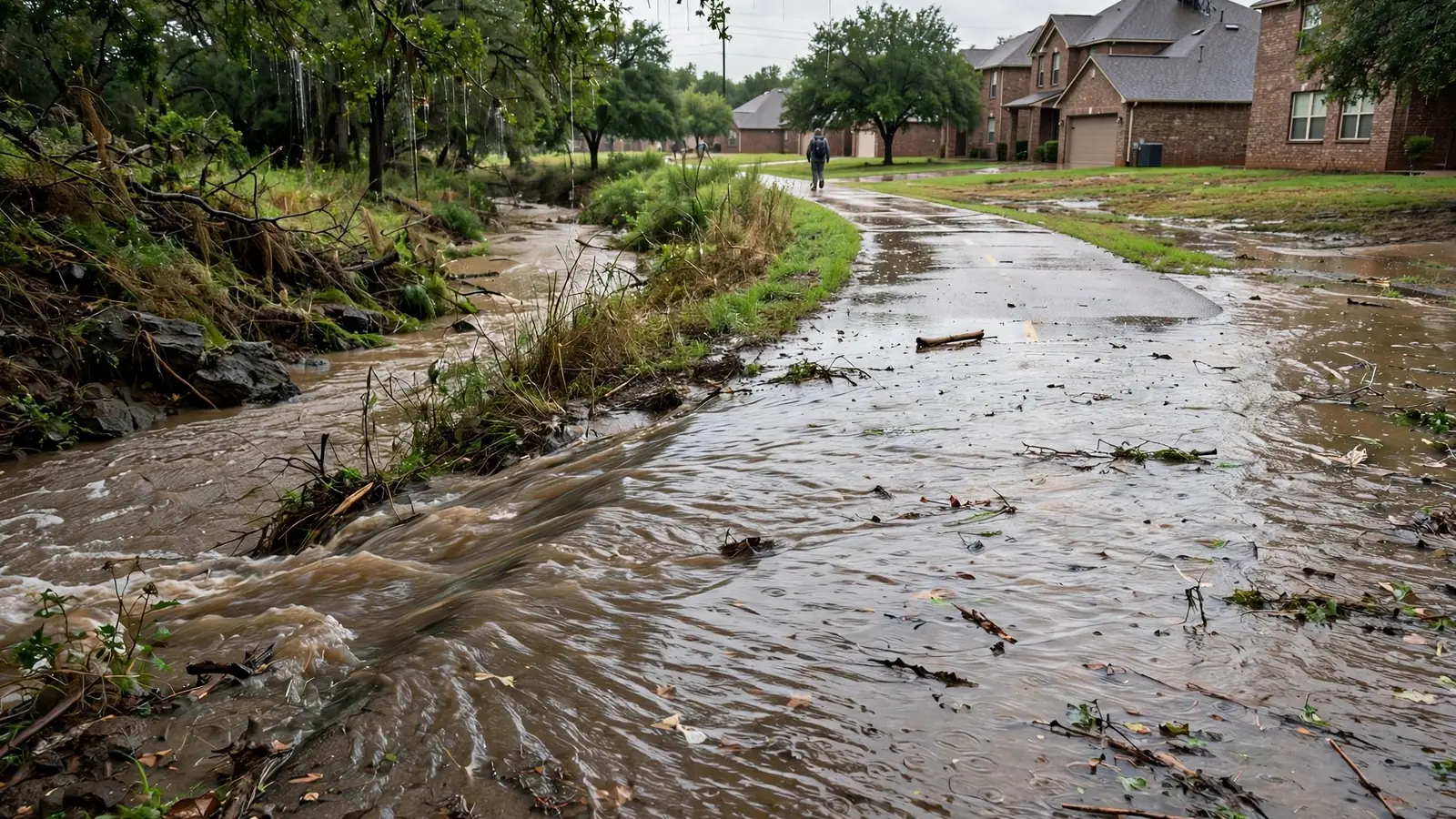
For most of the year the creek is a quiet feature. During heavy rain it can rise fast. The National Weather Service runs a river gauge on Walnut Creek near Mansfield and issues warnings when the water climbs toward flood stage [1]. When it does, low-lying roads and trail sections close until the water goes down [2].
Local problems
How water reaches homes in Walnut Creek Valley
Street runoff
During cloudbursts, curbs and storm drains can fill faster than they empty. Water then runs across yards and driveways toward the lowest homes on a street.
Backyard drainage toward the creek
Lots that slope toward the greenbelt send water across the back patio. A patio that has settled toward the house can direct it under the back door.
Creek rises
Homes closest to the channel face rising water during major floods. Most homes in the area are not on the creek itself, but low spots matter.
Aging supply lines
Houses from the 1970s and 1980s may still have original or older supply lines and valves that can fail inside walls or under sinks.
Water heater failures
Older tank water heaters in garages and closets leak at the base or fail suddenly when they reach the end of their life.
Slab leaks
Supply lines under the slab can develop pinhole leaks as they age, especially where soil movement stresses them.
Creek flooding
Walnut Creek flooding and what the gauge tells you
The NWS gauge on Walnut Creek near Mansfield is the best public signal of creek flooding. Flood warnings for it describe expected impacts, such as particular roads going under water at certain heights. In 2023 the Fort Worth forecast office lowered some flood stage levels on this gauge so that warnings start at heights that better match what actually floods [1].
You can check the gauge reading and forecast online during storms [5]. If a warning is issued and you live near the channel, move cars from low driveways, lift valuables off the floor in rooms closest to the creek and avoid driving through water on closed roads.
Flood maps add context. FEMA's Flood Map Service Center shows mapped flood hazard areas along Walnut Creek and its tributaries [6]. Being outside a mapped zone does not mean a home cannot take on water, especially from street runoff, but it is a useful starting point.
Assessment
How a contractor assesses water damage here
- 1
Find out whether it came from outside or inside
Creek or yard water is treated as contaminated. A burst pipe or water heater is usually clean at first.
- 2
Trace the entry point
Outside water usually enters at back doors, garage doors or low thresholds. Inside water is traced to the failed fixture or line.
- 3
Map the slab
Water spreads under flooring across a slab. Meters show how far it reached beyond the visible wet area.
- 4
Check the walls
Drywall wicks water upward. Readings above the visible line set where any cut will be made.
- 5
Look at the garage
Many water heaters sit in garages here. The shared wall with the house is checked.
- 6
Record everything
Photos, readings and a contents list support any insurance claim.
Diagnosis
Typical water losses in Walnut Creek Valley
| Source | Water category | Usual cleanup approach |
|---|---|---|
| Burst supply line indoors | Clean if caught early | Extract, dry in place where possible |
| Water heater leak in garage | Clean | Dry garage and shared wall; check adjoining room |
| Rain under the back door | Contaminated once it crosses the yard | Remove wet carpet and pad; clean and dry |
| Creek or street floodwater | Category 3 | Remove porous materials, clean, disinfect, dry |
| Slab leak | Clean at the source | Plumber repairs first; then dry floor and walls |
| Sewer backup during heavy rain | Category 3 | Black-water protocols in affected rooms |
Housing
Homes from the 1970s through the 1990s
The age of a house shapes what fails. Homes built in the 1970s and 1980s may have had plumbing updated over the years, but original shut-off valves, older water heater connections and supply lines under sinks can still be in place. Valves that have not been turned in decades sometimes fail to close completely when you need them, or start to drip after being moved.
Many homes of this era have carpet over a slab in living areas and bedrooms, with vinyl or tile in kitchens and baths. That combination means water from a kitchen leak runs across the hard floor and is drawn into carpet pad in the next room. Older carpet pad can break down when wet and is usually replaced.
Some homes from the 1970s may also have materials that were common at the time, such as certain vinyl floor tiles, mastic or textured ceilings, which could contain asbestos. Testing before removal is the safe approach [7].
Foundations
Clay soil, slabs and water
North Texas clay swells when wet and shrinks when dry. Houses here are built on slabs designed for that movement, but large amounts of water near or under the foundation, from a long leak or poor drainage, can affect how the slab behaves. Cracks in tile, doors that suddenly stick or new gaps in brick mortar after a leak are worth mentioning to a foundation specialist.
For cleanup, the slab is the floor that has to dry. Water under vinyl or tile has no way out except up through the flooring or out at the edges. Lifting the floor covering in the wet area often speeds drying significantly.
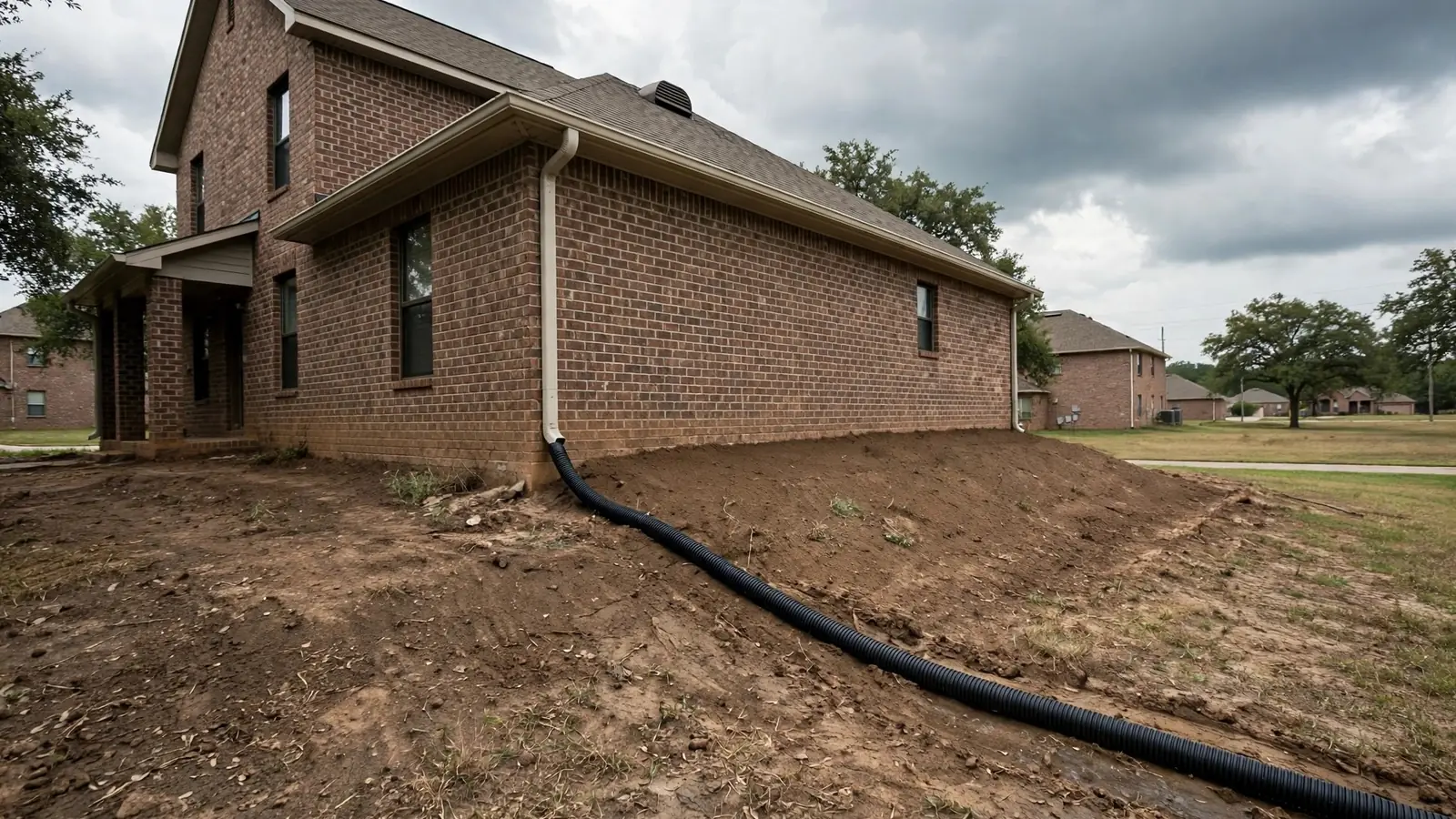
Outside, keeping water moving away from the house protects both the slab and the interior. Gutters, downspout extensions and soil that slopes away from the foundation all help, especially on lots that slope toward the creek.
The job
How cleanup is done in a Walnut Creek Valley home
For clean water from a broken line, the contractor extracts water, lifts or removes wet pad, takes off baseboards, and sets air movers and dehumidifiers to dry the walls and slab. Where drywall readings stay high, small holes behind the baseboard let air into the cavity. Most rooms dry in a few days.
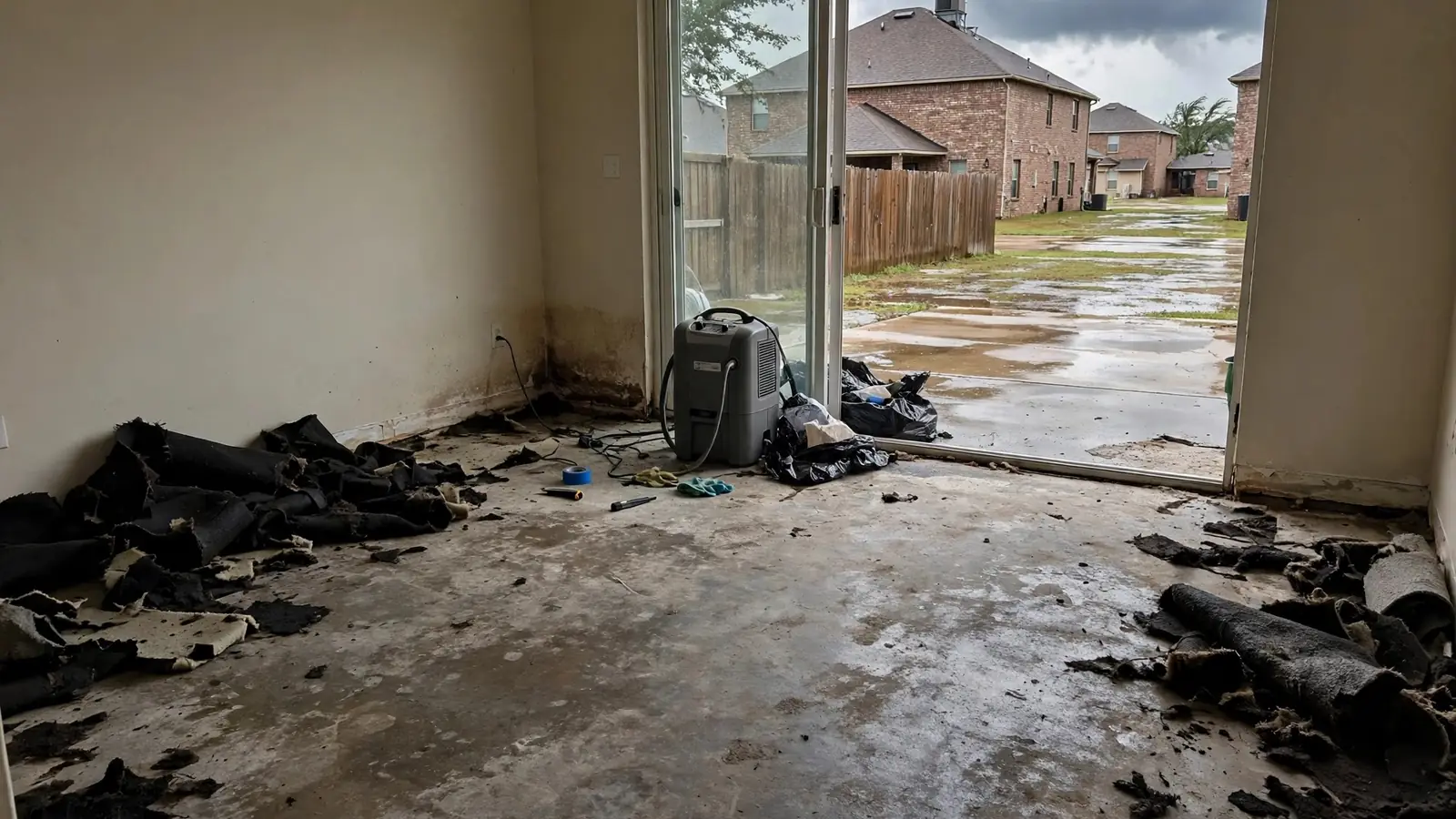
For water that came in from outside, the approach is stricter. Carpet and pad come out, drywall is cut above the wicking line, and all affected surfaces are cleaned and treated before drying starts. Contents that soaked up the water are photographed, listed and usually discarded.
Either way, the work ends with readings that show the house is dry and a set of photos and logs you can share with your insurer.
DIY vs pro
What you can do while you wait
If the water is clean and the power to the area is off, move furniture, rugs and boxes out of the wet area, wipe up what you can and open interior doors. Place foil under furniture legs that cannot be moved.
If the water came from outside, keep contact to a minimum. Wear boots and gloves, keep children and pets away and do not try to save soaked upholstery or mattresses. Photograph everything before anything is thrown out.
The visit
Your call and the visit
- 1
Call any time
You describe the water source, the rooms affected and whether the water is still coming in.
- 2
Arrival and walk-through
The contractor checks the source, the entry path and the safety of the house.
- 3
Plan
You hear what will be dried in place and what must be removed.
- 4
Agreement
You agree the work with the contractor directly before it starts.
- 5
Drying
Equipment runs with daily readings.
- 6
Close-out
Final readings and photos are shared with you for your records and insurer.
Prevention
Lowering the risk for homes near the creek
Start with the ground. Walk the yard during a heavy rain and watch where water goes. If it pools near the slab or runs toward a door, regrading or adding a drain can make a real difference. Keep gutters clean, especially in fall when leaves from mature trees fill them.
Inside, replace old supply hoses and have a plumber check shut-off valves that have not been used in years. If the water heater is older than its label suggests it should last, plan for replacement before it fails, and put a pan and leak sensor beneath it.
Consider flood insurance even if you are not in a mapped flood zone. Policies through the National Flood Insurance Program usually have a waiting period before coverage starts, so it has to be bought before a storm, not during one [8].
- Watch where water goes in heavy rain
- Keep gutters clear of leaves
- Exercise or replace old shut-off valves
- Look into flood coverage before storm season
Checklist
Creek-area storm checklist
| When | What to do |
|---|---|
| Before storm season | Clean gutters, check downspouts, clear yard drains, review insurance |
| When a warning is issued | Move cars from low spots, lift valuables, check the NWS gauge |
| During the storm | Stay off flooded roads and trails; watch doors and the garage for water |
| After the storm | Check the attic for roof leaks, the garage for water and walls near doors for damp |
| If water got in | Photograph, call for cleanup, contact your insurer |
Garages
Garages and water heaters in the valley
Attached garages are standard on Walnut Creek Valley homes, and they often hold the water heater, the washer and dryer, a second refrigerator and years of stored boxes. When a tank water heater fails, it can release its full contents across the garage floor in a short time and keep filling from the supply line until someone shuts it off.
Garage slabs usually sit a step lower than the house, so water tends to stay in the garage at first. The risk is the shared wall. Drywall on the house side of that wall, the bottom plate and the carpet in the room behind it can soak up water through the wall without anything showing in the house for a day or two. When a garage floods, ask the contractor to read the inside face of the shared wall.
Garages also take in storm water. A driveway that slopes toward the house carries street runoff straight under the garage door during heavy rain.
Trees
Mature trees, roots and gutters
Part of what makes the older streets in Walnut Creek Valley attractive is the trees, and they bring their own water issues. Leaves and seed pods fill gutters, which then overflow along the eaves and drop water right next to the slab or behind siding. Roots look for water and can find their way into older sewer lines through joints and small cracks, causing backups that show first in the lowest shower.
Big limbs over roofs add storm risk. A branch that falls in high wind can puncture shingles and let rain into the attic. After any big storm, a quick look at the roof from the ground and at the attic ceiling from inside can catch a leak before it stains the drywall below.
None of this means removing trees. Regular gutter cleaning, a plumber's camera check of the sewer line every few years and trimming limbs back from the roof keep most of these problems small.
Outdoor water
Pools, sprinklers and outdoor water near the slab
Backyard pools and lawn sprinkler systems are common on these larger, older lots. Both put a lot of water into the ground near the house. A sprinkler head that has been knocked sideways can spray against brick or a window frame every morning for weeks. A pool deck that has settled toward the house can send splash and rain water toward the back door instead of away from it.
These are slow problems rather than emergencies, but they add up. Damp baseboards on one exterior wall, a musty corner in a bedroom or peeling paint low on the outside of the house can all point to outdoor water running against the slab. Adjusting sprinkler heads, checking the timer and making sure deck drains are clear takes little effort.
If a wall keeps reading wet with no plumbing nearby, mention the sprinklers and pool to the contractor. It saves time hunting for a leak inside.
After a storm
Walk-through after a heavy storm
A ten-minute check after a big rain can catch a small problem while it is still small.
- Back and garage doorsCheck thresholds and the floor just inside for damp carpet or water under rugs.
- Ceilings near exterior wallsLook for new stains, especially under valleys in the roof and around vents.
- The atticWith a flashlight, check for wet insulation and drips around roof penetrations.
- Walls on the uphill sideFeel baseboards and look for swelling along walls where yard water could have pressed against the slab edge.
- Low drainsWatch the lowest tub or shower for water rising, a sign of sewer overload.
- OutsideNote where water pooled, so you can fix grading before the next storm.
Records
Records for creek-area homeowners
If you live near the creek, keep a simple file: photos of each room as it normally looks, a list of major belongings, copies of your homeowners and any flood policy, and receipts for big purchases. Store a copy away from the house, for example in cloud storage.
After a loss, add photos of the damage, the water line and the drying set-up, plus the contractor's readings. Clear records make it easier to show what was damaged and why it was removed. The guide to working with your insurance adjuster on this site goes into more detail.
Related problems
Problems that often come with water damage here
- MoldWet drywall and pad can grow mold within a day or two if not dried [9]. Larger jobs in Texas involve licensed remediators [10].
- Foundation questionsCracks or sticking doors after a large leak should be looked at by a foundation specialist.
- Sewer backupsHeavy rain can overload sewer lines and push water up through low drains.
- Roof leaks from hailSpring hail can damage roofs, with leaks appearing in later storms.
Shut-offs
Older shut-off valves
Many homes here still have the original gate valve at the main. Valves that have not moved in years can stick or fail to seal fully. Try yours gently once a year, and if it will not close, have a plumber replace it with a quarter-turn ball valve before you need it in a hurry.
FAQ
Walnut Creek Valley water damage questions
Is my home in the Walnut Creek floodplain?
Check your address on FEMA's Flood Map Service Center [6]. Being outside a mapped zone lowers but does not remove the risk.
Does homeowners insurance cover creek flooding?
Usually not. Flooding from rising outside water is generally covered by a separate flood policy [8].
How do I know when the creek is close to flooding?
Watch NWS warnings and the gauge for Walnut Creek near Mansfield [5].
Can carpet be saved after yard water came in?
Usually not. Water that crossed a yard is treated as contaminated, and carpet and pad are removed [4].
My house was built in the 1980s. Should I worry about old plumbing?
It is worth having a plumber check original shut-off valves, supply lines and the water heater connections.
What if water came up through the floor?
That can be a slab leak. A plumber should find and repair it before drying starts.
Can I call while a storm is still going on at night?
Yes. Storms do not keep office hours, and neither does this line: it is answered 24/7.
Who will come to my house?
An independent local contractor. This site is a call-in referral line.
Sources and citations
- [1]NWS Fort Worth: Walnut Creek near Mansfield flood stage update (2023)
- [2]Mansfield Record: Storms douse streets, football, parks
- [3]NeighborhoodScout and Homes.com: Walnut Creek Valley neighborhood
- [4]IICRC S500 Standard for Professional Water Damage Restoration
- [5]NOAA National Water Prediction Service: Walnut Creek at Mansfield (MNFT2)
- [6]FEMA Flood Map Service Center
- [7]EPA: Asbestos in your home
- [8]FloodSmart (National Flood Insurance Program)
- [9]EPA: A Brief Guide to Mold, Moisture and Your Home
- [10]TDLR: Mold Assessors and Remediators